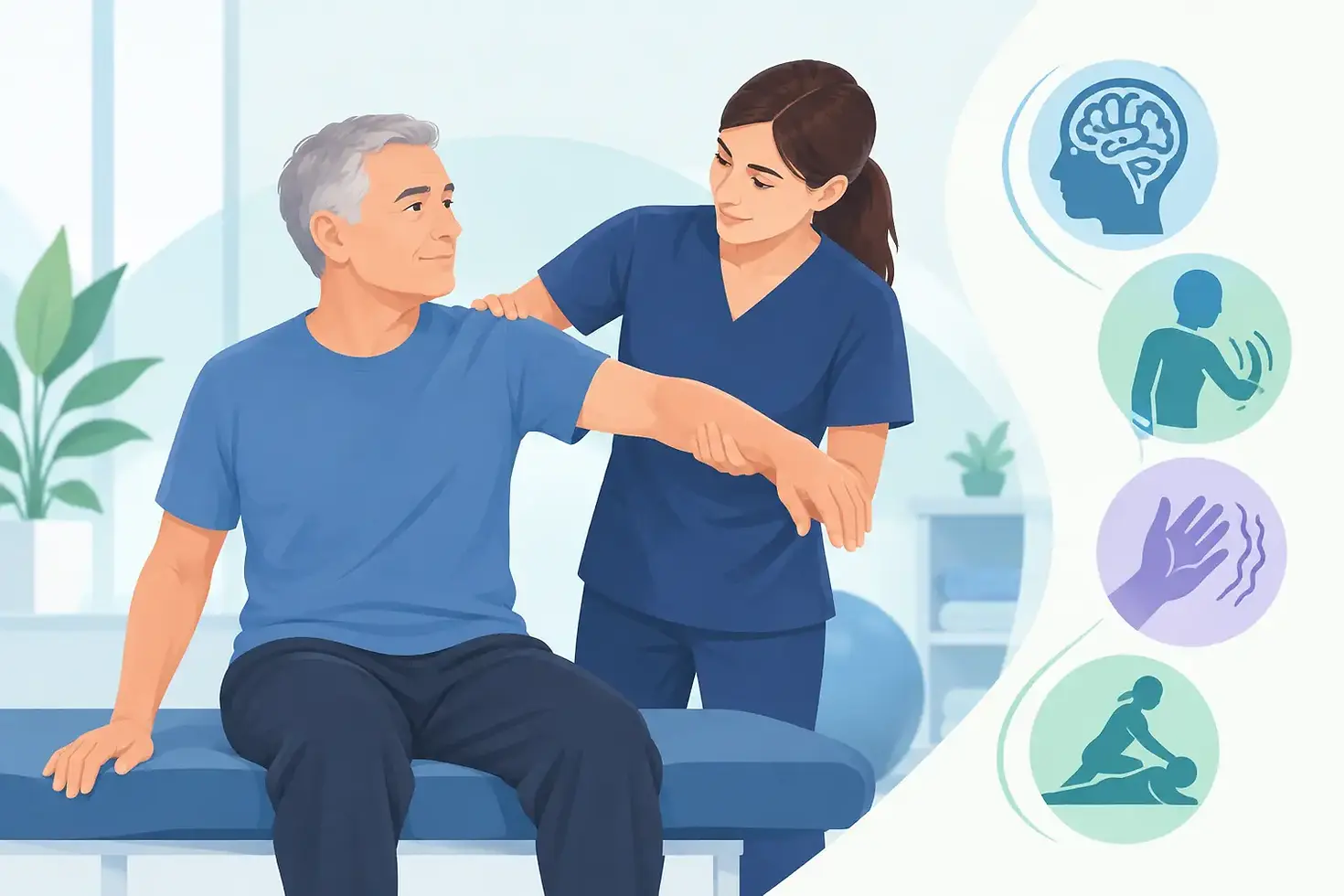
A Practical Guide to Stroke Spasticity Care

A hand that stays clenched, a foot that catches on the floor, an arm that pulls tightly against the chest - these changes can make everyday life after stroke feel smaller than it should. This guide to stroke spasticity explains why those changes happen, what treatment can realistically address, and how patients and families can pursue care that protects movement, comfort, and independence.
Spasticity is not a sign that someone has failed rehabilitation or is not trying hard enough. It is a neurologic effect of stroke. With the right assessment and a long-term plan, many people can reduce its impact on dressing, walking, sleep, hygiene, work, and the activities that make life feel like their own.
What stroke spasticity feels and looks like
After a stroke, damage to areas of the brain that help regulate movement can disrupt communication with the muscles. Instead of responding smoothly to a person’s intention to move, certain muscles may become overactive. They tighten too easily, resist stretching, or contract in patterns that are hard to control.
Spasticity often develops in the weeks or months after stroke, though timing differs from person to person. It may affect one limb or several. Common patterns include a bent elbow and clenched fist, a shoulder held close to the body, a stiff knee, toes that curl, or a foot that turns inward or points down.
The experience is more than “tight muscles.” Spasticity can cause pain, pulling, cramps, reduced range of motion, fatigue, skin problems in the palm or under the arm, and difficulty with balance. A person may be able to stand but struggle to clear their foot while walking. They may have some use of an arm but be unable to open the hand to wash it, hold a cup, or put on a sleeve.
Spasticity is also different from weakness, although both can occur together. Weakness means a muscle cannot produce enough voluntary force. Spasticity means a muscle is receiving an excessive reflex signal to tighten. Treating one without understanding the other can lead to frustration. A muscle that is tight may still be helping someone stand or transfer safely, so treatment should be individualized rather than automatic.
Why early assessment can protect function
Spasticity can gradually shorten muscles and connective tissue when joints stay in the same position for long periods. This may lead to contractures, which are fixed limitations in movement. Once a joint becomes significantly restricted, treatment can become more difficult and daily care can become more painful.
An early evaluation does not mean every person needs injections, medication, or an aggressive intervention. It means the care team can identify patterns before stiffness takes over function. They can measure range of motion, watch how the person walks or uses an arm, assess pain and skin health, and ask what activity matters most right now.
That last question matters. For one person, the goal may be opening a hand enough to prevent skin breakdown. For another, it may be walking through a grocery store without fear of falling. A meaningful plan targets function, not simply muscle tone on a chart.
Seek timely clinical guidance if a limb suddenly becomes much stiffer, pain sharply worsens, swelling or redness appears, the skin is breaking down, or spasticity interferes with safe transfers and walking. These changes can have causes beyond the usual stroke pattern and deserve medical attention.
A guide to stroke spasticity treatment options
Effective care usually combines treatments rather than relying on one solution. The right mix depends on where spasticity occurs, how severe it is, the person’s overall health, current medications, goals, and access to ongoing therapy.
Skilled rehabilitation therapy
Physical therapy and occupational therapy are foundational. Therapists use guided movement, positioning, stretching, strengthening, balance training, gait work, and task-specific practice to help the nervous system and body work together as effectively as possible.
The goal is not to force a limb into motion. A thoughtful therapist looks for what is limiting movement: overactive muscles, weakness, pain, poor trunk control, altered sensation, fear of falling, or a combination. Therapy can also teach family members safer ways to assist with transfers, dressing, range-of-motion routines, and home positioning.
Consistency matters more than exhausting effort. A home program should be realistic enough to continue between visits. Ten focused minutes practiced correctly may be more useful than a complicated routine that cannot be sustained.
Bracing, splinting, and positioning
An ankle-foot orthosis may help control foot drop or improve stability during walking. A hand splint may support a more open position, protect skin, or help maintain range of motion. Wheelchair seating, bed positioning, and supportive cushions can also reduce prolonged postures that reinforce tightness.
These tools are useful when they match the person’s needs and are reviewed regularly. A brace that causes pressure, pain, or poor circulation is not a solution. Fit, skin checks, comfort, and function should all be reassessed as recovery changes.
Medication and targeted injections
Oral medications may be considered when spasticity is widespread or causes significant discomfort. They can reduce muscle overactivity, but they may also cause drowsiness, dizziness, fatigue, or weakness. For someone already managing balance problems, those trade-offs need careful discussion with a prescribing clinician.
For spasticity concentrated in specific muscles, botulinum toxin injections may be an option. These injections temporarily reduce overactivity in targeted muscles, often making it easier to stretch, fit a brace, clean the hand, participate in therapy, or improve a walking pattern. Their benefit is greatest when paired with active rehabilitation and clear functional goals. They are not a cure, and repeat treatment may be needed.
Some people with severe, generalized spasticity may be referred to a specialist to discuss other interventions, including intrathecal medication delivery or surgical options. These approaches are not first-line care for everyone, but they can be appropriate when conservative treatment has not provided enough relief or function.
Daily strategies that support safer movement
Daily life can either reinforce difficult movement patterns or create opportunities for progress. Small adjustments can make a meaningful difference when practiced consistently.
Avoid pulling forcefully on a stiff arm or hand. Instead, use slow, supported movement and follow techniques taught by a qualified clinician. Sudden stretching can trigger more resistance and may cause pain. During dressing, it is often easier to place the affected arm or leg into clothing first, then remove clothing from the stronger side first.
Pay attention to triggers. Spasticity can increase with stress, fatigue, pain, infection, constipation, a full bladder, tight clothing, or poor positioning. Keeping a simple record of when tightness worsens can help uncover patterns and give the care team useful information.
Movement should stay connected to real life. Practice standing at the counter if the goal is preparing a meal. Practice opening the hand during grooming if personal care is the barrier. Repetition matters, but repetition with purpose is more likely to support independence.
Families also need support. Caregiving can become physically demanding when stiffness makes bathing, transfers, or dressing difficult. Asking for training is not a sign of inadequacy. It is a practical way to protect both the survivor and the person helping them.
Building a recovery plan that does not leave people behind
Stroke recovery is rarely linear. A person may make visible gains, plateau, then improve again when pain is addressed, a brace is adjusted, or a more targeted treatment plan begins. The need for therapy does not disappear simply because hospital rehabilitation has ended.
A strong plan connects medical evaluation with hands-on care, home strategies, and practical goals. It should also account for cost. Too many patients delay treatment because they assume specialized rehabilitation is beyond reach, even while stiffness, pain, and lost mobility become harder to manage.
CAMED exists to help close that gap through accessible, non-surgical therapeutic care and recovery support for people whose needs continue after discharge. Financial circumstances should not decide whether someone can pursue safer movement, less pain, and a more independent life.
If spasticity is shrinking what you or someone you love can do, ask for an assessment focused on function. The next meaningful step may be as specific as opening a hand, taking a safer step, or returning to a daily task that once seemed out of reach.


Comments