
A Guide to Recovery After Discharge

The day you leave the hospital is often treated like the finish line. For many patients, it is actually the moment the real work begins. This guide to recovery after discharge is for people who are still dealing with pain, weakness, stiffness, fatigue, swelling, or limited mobility after they get home - and for the families trying to help them recover without feeling lost.
Discharge means you are stable enough to leave acute care. It does not always mean you are fully healed, fully mobile, or ready to return to normal life. That gap matters. It is where preventable setbacks happen, where pain becomes chronic, and where families are left to coordinate medications, appointments, exercises, transportation, and basic daily tasks with very little support.
Why recovery after discharge is often harder than expected
Hospitals are designed to manage urgent medical needs. Home recovery is different. Once you are discharged, you may be expected to track symptoms, manage medications, remember therapy instructions, avoid falls, protect healing tissue, and gradually rebuild strength. If you are recovering from stroke, surgery, injury, severe pain, or a long period of immobility, those expectations can feel overwhelming.
This is especially true for patients with musculoskeletal pain, nerve symptoms, balance problems, or chronic conditions that were already affecting function before the hospital stay. A discharge packet can tell you what happened medically. It may not tell you how to safely get in and out of bed, walk without guarding, manage swelling through the day, or return to cooking, bathing, driving, or work.
That is why recovery planning needs to focus on function, not just medical clearance.
A guide to recovery after discharge starts with the first 72 hours
The first few days at home set the tone for the next few weeks. Many complications begin early - missed medications, dehydration, overexertion, poor sleep, constipation, falls, or rising pain that causes people to stop moving altogether.
Start by making your home easier to navigate. Clear walkways, move essential items within reach, and create one main recovery area with medications, water, phone charger, assistive devices, and written instructions close by. If stairs are a challenge, limit unnecessary trips up and down. If balance is reduced, do not assume you can manage the same way you did before hospitalization.
Just as important, review your discharge instructions while you are still relatively fresh. Know which medications are new, which ones were stopped, and what symptoms require a call to your doctor. If anything is confusing, ask for clarification quickly. Small misunderstandings can become major setbacks.
Pain control should support movement, not replace it
Many patients fear pain after discharge, and for good reason. Pain can interrupt sleep, limit walking, reduce appetite, and make therapy harder. But pain control is not only about getting through the day. It should help you move safely enough to prevent further decline.
That usually means using a full strategy rather than relying on one tool. Medication may be part of the plan, but so are positioning, pacing, heat or cold when appropriate, gentle therapeutic movement, and hands-on care when available. The right plan depends on the condition. Swelling after an injury is not managed the same way as spasticity after stroke, and nerve pain is different from muscle guarding or joint stiffness.
There is also a trade-off to watch closely. Doing too little can lead to stiffness, weakness, and more fear of movement. Doing too much too soon can inflame healing tissue and set you back for days. Recovery often improves when patients learn that discomfort and danger are not always the same thing, but that distinction should be guided by a qualified clinician, not guesswork.
Protect mobility before you try to rebuild endurance
People often focus on getting stronger, but the first priority is usually safer movement. Can you stand up without losing balance? Can you transfer in and out of bed or a chair? Can you walk to the bathroom without rushing or holding your breath? Can you use your affected side after stroke, injury, or prolonged pain without compensating in ways that create new problems?
Mobility recovery works best when it is specific. General advice to "stay active" is not enough for someone with foot drop, post-stroke weakness, low back pain, shoulder restriction, or severe knee stiffness. The body adapts quickly after illness or injury. If you move with fear, asymmetry, or poor mechanics for too long, those patterns become harder to reverse.
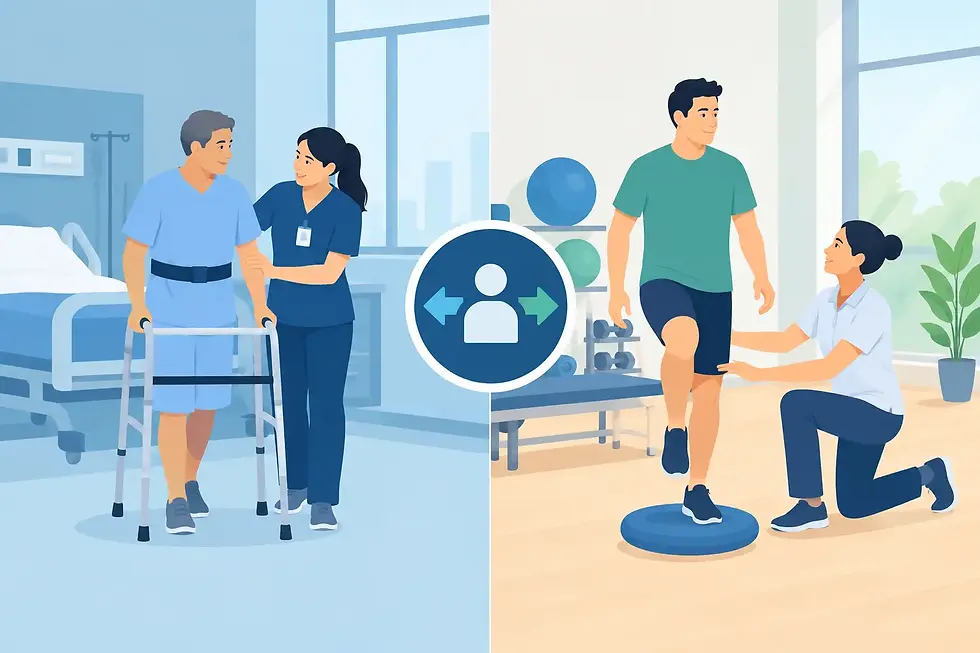
This is where follow-up rehabilitation matters. Skilled therapy can address range of motion, muscle activation, gait, posture, swelling, coordination, and pain together instead of treating each symptom as a separate issue. For many patients, especially those with limited resources, that support can make the difference between gradual progress and long-term disability.
Watch for warning signs without becoming consumed by them
A good guide to recovery after discharge should help you stay alert without living in panic. Some symptoms mean you need urgent medical advice. Others are expected during healing but still worth monitoring.
Call your medical team promptly if you notice worsening shortness of breath, chest pain, sudden confusion, new one-sided weakness, fever, uncontrolled vomiting, rapidly increasing swelling, wound drainage, severe medication reactions, or pain that becomes dramatically worse rather than gradually improving. If you are recovering from stroke or a serious neurological event, changes in speech, vision, coordination, or alertness should never be brushed off.
At the same time, not every hard day means recovery is failing. Fatigue can fluctuate. Pain can rise after activity. Sleep may be disrupted. The key is pattern recognition. Are you slowly regaining function over time, or steadily losing it? If your walking distance is shrinking, if you are skipping meals because moving hurts too much, or if daily tasks are becoming less manageable instead of more manageable, your current plan needs attention.
Recovery at home is not only physical
Discharge can bring relief, but it can also bring fear, frustration, and grief. Some patients feel abandoned once the constant monitoring stops. Others are ashamed that they still need help. Family members may be exhausted by caregiving, transportation demands, and financial pressure.
These emotional realities affect physical healing. People who feel discouraged often stop moving, miss appointments, or assume that persistent pain is something they simply have to live with. That is a dangerous message, especially for underserved patients who have already been told to wait, tolerate, or give up on fuller recovery.
What helps is structure. Keep a simple daily plan. Set small goals that matter in real life, such as standing long enough to prepare breakfast, walking to the mailbox, or dressing with less assistance. Progress becomes easier to see when it is connected to independence, not just a pain score.
When follow-up care should go beyond routine checkups
A primary care visit or surgical follow-up is important, but many patients need more than a brief medical review. If pain, stiffness, weakness, swelling, or functional loss continue after discharge, targeted rehabilitative care should not be treated as optional. This is especially true when the alternative is declining mobility, repeated ER visits, avoidable surgery, or long-term dependence.
Specialized non-surgical care can be particularly valuable for chronic pain, post-stroke recovery, lymphatic congestion, musculoskeletal dysfunction, and complex mobility problems. In those cases, the goal is not only symptom relief. It is restoring movement patterns, reducing complications, and helping people participate in daily life again.
That access matters. Too many patients are discharged with serious rehabilitation needs and no realistic path forward because insurance is limited, appointments are delayed, or costs are out of reach. Organizations like CAMED exist to close that gap with affordable, expert care focused on function, pain relief, and long-term recovery.
Build a recovery plan around daily life
The strongest recovery plans are practical. They account for your home setup, your support system, your work demands, your transportation, and your finances. A plan that looks good on paper but cannot be followed in real life will not protect your health.
Think in terms of routines. Take medications at the same times each day. Schedule movement before stiffness builds. Rest before exhaustion becomes a crash. Keep follow-up appointments written in one visible place. If family members are helping, assign specific roles so one person is not carrying everything alone.
Recovery also benefits from honesty. If you cannot afford a device, if you are skipping therapy because transportation is unreliable, or if your pain is preventing exercise, say that early. Good clinicians do not need a perfect patient. They need a clear picture of what is getting in the way.
Leaving the hospital is not the end of care. It is the point where recovery needs direction, support, and persistence. If you are still hurting, still limited, or still unsure how to regain function, that does not mean you failed. It means your next stage of care deserves the same seriousness as the first.


Comments