
Best Stroke Recovery Treatment Options
The first weeks after a stroke can feel like a race against time, but recovery does not end when a hospital discharge papers are handed over. For many families, the real challenge begins at home - when weakness, pain, stiffness, speech changes, balance problems, and daily care needs are still very much present. The best stroke recovery treatment options are the ones that match the person in front of you, start as early as safely possible, and continue long enough to rebuild function, not just stabilize symptoms.
What the best stroke recovery treatment options have in common
There is no single treatment that works for every stroke survivor. Recovery depends on the area of the brain affected, how severe the stroke was, the person’s age and health, and how quickly rehabilitation begins. Even so, the best stroke recovery treatment options tend to share a few traits. They are coordinated, practical, and focused on meaningful gains like walking safely, using a hand again, speaking clearly, swallowing safely, and managing pain that interferes with everyday life.
They also recognize an uncomfortable truth - many patients leave acute care long before recovery is complete. A person may be medically stable but still unable to dress independently, climb stairs, return to work, or tolerate standing for more than a few minutes. That gap between survival and function is where skilled rehabilitation matters most.
Physical therapy for movement, balance, and strength
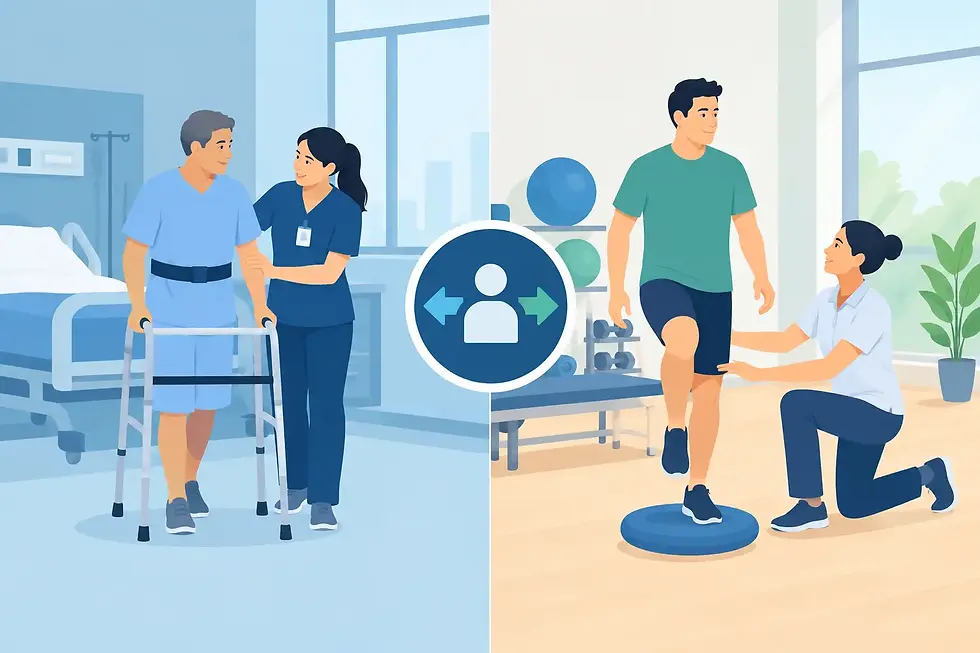
Physical therapy is often one of the core stroke recovery treatments because mobility loss affects nearly every part of life. After a stroke, people may experience one-sided weakness, foot drop, poor balance, reduced endurance, or abnormal muscle tone that makes walking difficult and unsafe. Physical therapy works to retrain movement patterns, improve transfers, reduce fall risk, and build confidence with standing and walking.
The best programs do more than assign generic exercises. They assess gait, joint limitations, trunk control, and the way fatigue changes performance over time. A patient who can take a few steps in a clinic may still struggle on uneven sidewalks, in a narrow bathroom, or while carrying groceries. Good treatment plans account for those real-world demands.
That said, progress is rarely linear. Some patients improve quickly with intensive practice, while others need slower progression because of pain, spasticity, heart conditions, or fear of falling. The right approach is not the most aggressive one on paper. It is the one that is safe, consistent, and sustainable.
Occupational therapy for daily independence
When families ask whether recovery is "working," they are often asking a simple question: can this person do more on their own today than they could last month? Occupational therapy targets exactly that issue. It focuses on daily tasks such as bathing, dressing, grooming, toileting, cooking, handwriting, and using the affected arm and hand.
This matters because stroke does not only change strength. It can affect planning, coordination, sensation, visual awareness, and the ability to sequence basic activities. A survivor may physically be able to stand at the sink but still struggle to organize the steps of brushing teeth or putting on a shirt safely.
Occupational therapy can include task practice, adaptive strategies, fine motor retraining, home setup recommendations, and techniques to improve use of the affected upper limb. For some people, this means relearning grip and release. For others, it means finding safe, efficient ways to function now while continuing to rebuild skill over time.
Speech therapy for communication and swallowing
Speech therapy is one of the best stroke recovery treatment options when a stroke affects speaking, understanding language, reading, writing, memory, or swallowing. These problems can be isolating and dangerous. A person who cannot express pain, follow instructions, or swallow safely faces risks that extend far beyond frustration.
Speech-language pathologists work on aphasia, dysarthria, cognitive-communication deficits, and swallowing disorders. Treatment may involve word-finding practice, breath and voice control, attention training, memory strategies, and exercises or techniques that make eating and drinking safer.
Families sometimes underestimate the value of this work if speech changes are mild. But even small communication problems can make medical appointments, medication management, and social interaction much harder. Restoring communication is not just about conversation. It is about safety, dignity, and participation in life.
Pain management and hands-on therapeutic care
Stroke recovery is often discussed in terms of weakness and speech, but pain can quietly derail rehabilitation. Shoulder pain, neck tension, joint stiffness, spasticity-related discomfort, back pain from altered posture, and overuse pain on the stronger side are common. When pain is not addressed, patients move less, sleep worse, and participate less fully in therapy.
This is why non-surgical pain management and hands-on therapeutic care deserve more attention in stroke rehabilitation. Manual therapy, soft tissue treatment, positioning strategies, mobility work, and guided movement can help reduce stiffness, improve comfort, and make exercise more productive. For patients who feel trapped between brief standard therapy visits and the suggestion that they simply "wait and see," this kind of care can be a turning point.
It also helps to treat the whole body, not just the visibly affected limb. After a stroke, compensation patterns can create secondary pain in the low back, hips, knees, or unaffected shoulder. A thoughtful treatment plan looks at how the entire body is adapting.
Spasticity treatment and range-of-motion support
Some stroke survivors develop spasticity - a velocity-dependent increase in muscle tone that can make movement feel stiff, awkward, or even painful. The arm may curl inward. The hand may stay clenched. The ankle may resist normal walking mechanics. Left unmanaged, spasticity can contribute to contractures, skin problems, hygiene challenges, and major barriers to function.
Treatment options vary. They may include stretching, splinting, positioning, repetitive task practice, manual therapy, therapeutic exercise, and physician-guided medical management when appropriate. What works best depends on severity and on the person’s goals. Someone hoping to improve hand hygiene may need a different plan than someone trying to return to typing or meal preparation.
The key is early attention. Waiting until stiffness becomes severe usually makes recovery harder.
Cognitive and emotional recovery matter too
Not every stroke leaves obvious physical deficits. Some survivors can walk independently yet struggle with concentration, memory, mood changes, impulsivity, or mental fatigue that makes work and family life difficult. Depression and anxiety are also common after stroke, and they can reduce motivation, energy, and treatment follow-through.
The best stroke recovery treatment options include support for cognitive and emotional health. That may involve neurocognitive therapy, counseling, caregiver education, structured routines, and realistic pacing strategies. Recovery is not only about muscle activation. It is also about helping the brain manage attention, decision-making, and emotional stress.
Families should not dismiss these symptoms as a lack of effort. They are part of the medical picture and deserve treatment.
Home programs and caregiver training
Clinic sessions matter, but what happens between visits often determines long-term progress. A strong home program turns rehabilitation into a daily process rather than an occasional appointment. That program should be specific, achievable, and adjusted as the patient changes.
Caregiver training is just as important. Loved ones need clear instruction on safe transfers, positioning, fall prevention, skin protection, and how to support practice without causing injury or burnout. Recovery is harder when families are left to improvise.
This is where community-based, mission-driven care can make a real difference. Organizations such as CAMED help address the gap between hospital discharge and full functional recovery by offering specialized therapeutic support that many patients still need but struggle to access affordably.
Choosing the right treatment plan
The best plan is rarely one service in isolation. Most people benefit from some combination of physical therapy, occupational therapy, speech therapy, pain-focused treatment, and ongoing reassessment. The right mix depends on current deficits, financial realities, transportation, home support, and personal goals.
If a patient has limited therapy access, prioritize the deficits most likely to affect safety and independence first. If swallowing is unsafe, that cannot wait. If shoulder pain prevents participation in exercise, pain care needs to move up the list. If cognition is the main barrier to returning home alone, that issue deserves direct treatment even if walking looks fairly good.
Patients and families should also ask a practical question: is the treatment leading to meaningful changes in daily life? Better range of motion is valuable, but it matters even more when it helps someone get dressed, stand in the shower, hold a cup, or sleep through the night with less pain.
Stroke recovery is rarely quick, and it is almost never one-size-fits-all. But with the right treatment options, consistent follow-through, and care that sees the whole person, progress remains possible long after the crisis has passed. The goal is not simply to survive a stroke. The goal is to reclaim function, reduce suffering, and give people a fair path back to independence.


Comments