
How to Reduce Body Stiffness Safely

Waking up stiff is frustrating. Feeling your back resist when you stand, your shoulders pull when you reach, or your legs tighten after sitting too long can make ordinary tasks feel harder than they should. If you are searching for how to reduce body stiffness, the right answer is usually not one quick fix. It is a mix of smart movement, tissue care, and knowing when stiffness is a warning sign instead of a minor nuisance.
Body stiffness is common, but it should not be brushed off when it starts limiting your work, sleep, balance, or independence. For many adults, especially after injury, surgery, stroke, chronic pain, or long periods of inactivity, stiffness becomes part of a larger pattern. The good news is that the body often responds well to consistent, targeted care.
Why body stiffness happens
Stiffness is not always caused by the same thing. Sometimes it is muscular, such as tightness after exercise, poor posture, or too many hours in one position. Sometimes it is joint-related, with arthritis, inflammation, old injuries, or post-surgical changes reducing mobility. In other cases, the nervous system is involved. After stroke or with certain chronic conditions, muscles may stay tense or guarded, making movement feel restricted and effortful.
Pain also changes the picture. When something hurts, the body protects itself by reducing motion. That protective response can help in the short term, but over time it creates more stiffness, weaker support muscles, and less confidence in movement. This is one reason people can get stuck in a cycle where pain leads to guarding, guarding leads to stiffness, and stiffness leads to more pain.
Age can play a role, but stiffness is not simply something you must accept. Reduced activity, poor recovery after illness, repetitive job demands, stress, dehydration, and untreated musculoskeletal problems all contribute. The cause matters because the best way to reduce body stiffness depends on what is driving it.
How to reduce body stiffness at home
For everyday stiffness, the most effective starting point is gentle, regular movement. Many people wait to move until they feel loose, but the body often loosens because it moves. A short walk, slow marching in place, shoulder rolls, or careful sit-to-stand practice can improve circulation and warm the tissues without overloading them.
Stretching can help, but technique matters. Aggressive stretching often backfires, especially when the area is already irritated or inflamed. It is better to use slow, controlled stretches that you can breathe through. Hold the position long enough for the muscle to ease, not long enough to create sharp pain. Mild pulling is acceptable. Pinching, burning, or joint pain is not.
Heat is another useful tool. A warm shower, heating pad, or warm towel can reduce muscle guarding and make it easier to move. Heat tends to work best for general stiffness, chronic tension, and morning tightness. If the area is newly injured, swollen, or visibly inflamed, heat may not be the right choice at that moment.
Hydration and sleep also matter more than many people realize. Muscles and connective tissue do not perform well when the body is under-recovered. Poor sleep increases pain sensitivity and muscle tension. Dehydration can make tissue feel less resilient. These are not glamorous solutions, but they are part of effective recovery.
The role of movement in reducing stiffness
The body responds to consistency better than intensity. Ten minutes of mobility work done daily is often more useful than one long session done once a week. If you are trying to figure out how to reduce body stiffness, think in terms of frequency first.
Start with movements that match your limitations. If your hips and lower back stiffen after sitting, your program may include standing back extensions, gentle trunk rotation, and walking breaks every 30 to 60 minutes. If your neck and shoulders are the problem, posture resets, chest opening, and controlled shoulder blade movement may help more than simply stretching the neck again and again.
For people with chronic pain, movement should be gradual and realistic. Some soreness after activity can be normal. A major flare that lasts two days is a sign that the dose was too high. This is where many people give up too soon or push too hard. Progress usually comes from working just below the level that triggers a setback.
Morning stiffness needs a different approach
Morning stiffness often improves with warmth and slow activation rather than forceful stretching. Try getting out of bed in stages. Move your ankles, bend and straighten your knees, gently rotate your shoulders, then sit and breathe before standing. Once upright, a warm shower and a few minutes of walking can be more effective than trying to touch your toes right away.
If morning stiffness lasts only a few minutes, it may reflect normal overnight immobility. If it lasts an hour or more on a regular basis, especially with swelling or fatigue, it deserves closer medical evaluation.
Stiffness after inactivity is common but treatable
Long car rides, desk work, and sedentary recovery periods often create predictable stiffness. In these cases, the goal is not a heroic workout at the end of the day. It is breaking up stillness before it builds into pain. Short movement snacks throughout the day can protect mobility better than one session of exercise after eight hours of sitting.
When stiffness points to a bigger problem
Not all stiffness should be managed at home. If the problem keeps returning, spreads, or starts interfering with walking, dressing, lifting, balance, or sleep, it is time to look deeper. Persistent stiffness can reflect joint degeneration, nerve involvement, post-stroke muscle tone changes, scar tissue restrictions, inflammatory disease, or incomplete rehabilitation after injury.
You should seek professional assessment sooner if stiffness comes with numbness, weakness, major swelling, fever, unexplained weight loss, loss of bladder or bowel control, or severe pain after a fall or accident. These are not signs to stretch through.
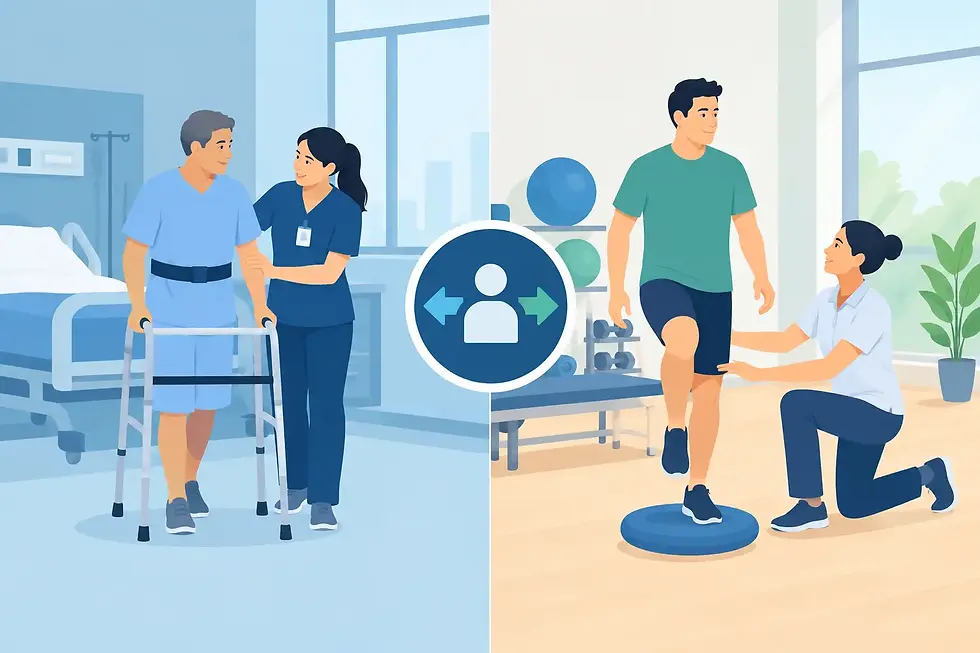
There is also an access problem many families know too well. Patients are discharged from acute care once the emergency has passed, yet they are still stiff, painful, and far from functional recovery. That gap leaves people struggling at home with symptoms that continue to limit independence. Specialized non-surgical therapy can be a critical next step when the body is not recovering on its own.
How therapy helps reduce body stiffness
Hands-on care and guided therapeutic exercise can address stiffness more precisely than self-care alone. A trained clinician can determine whether the main issue is muscle guarding, joint restriction, nerve sensitivity, postural imbalance, movement compensation, or neurologic tone. That distinction changes treatment.
Therapy may include manual techniques to improve soft tissue mobility, joint mobilization, lymphatic support when swelling contributes to heaviness and tightness, neuromuscular re-education, stretching matched to your condition, and functional exercises that help your body use its available range safely. For post-stroke patients or those with long-term mobility loss, recovery often requires more than general fitness advice. It requires a structured plan built around daily function.
This is especially important when stiffness is chronic. Once the body has adapted to pain and limited motion for months or years, restoring movement is not only about flexibility. It is about retraining tolerance, strength, coordination, and confidence. That process should feel challenging but safe.
Practical habits that support lasting relief
The strongest long-term results usually come from combining professional care with daily habits. Keep your body in motion during the day, but pace yourself. Use heat strategically before activity if it helps you move more freely. Build strength alongside flexibility, because unstable joints and weak support muscles often become stiff again. Pay attention to ergonomics, but do not assume perfect posture is the whole answer. Static posture of any kind, even "good" posture, becomes a problem when held too long.
It also helps to notice your pattern. Does stiffness peak in the morning, after sitting, after stress, or after overexertion? Does it improve with walking or worsen as the day goes on? These details matter. They can point to whether you need more mobility, more recovery, better pacing, or a thorough clinical evaluation.
If you have tried home strategies and still feel trapped by pain, tightness, or functional decline, that is not a personal failure. It means your body may need a more specialized level of care. At CAMED, this is exactly the kind of overlooked recovery need that deserves serious attention, especially for patients trying to avoid surgery, reduce dependence on medication, or regain daily independence after the hospital phase has ended.
Relief usually starts with one practical step taken consistently. When stiffness has been stealing your energy, mobility, or confidence, small guided changes can begin to give those things back.


Comments