
A Guide to Post Stroke Rehabilitation
The hardest part for many stroke survivors is not the day of the stroke. It is the week after discharge, when the hospital care slows down but the real work of recovery begins. This guide to post stroke rehabilitation is for patients and families facing that gap - when weakness, balance problems, pain, speech changes, and daily dependence can feel overwhelming, but progress is still possible.
Stroke rehabilitation is not a single treatment. It is a structured, ongoing process of helping the brain and body relearn skills, adapt to changes, and regain as much independence as possible. For some people, that means walking safely again. For others, it means dressing without help, speaking more clearly, managing shoulder pain, or returning to work. The right plan depends on the type of stroke, the area of the brain affected, the person’s health before the stroke, and how quickly rehabilitation begins.
What post-stroke rehabilitation is really trying to do
A stroke can interrupt movement, sensation, language, memory, swallowing, coordination, and emotional regulation. Recovery is not only about getting stronger. It is about retraining the nervous system through repetition, guided movement, and meaningful daily practice.
This matters because the brain can change after injury. That capacity, often called neuroplasticity, gives rehabilitation its purpose. The brain may not recover in exactly the same way it functioned before, but with consistent therapy it can build new pathways and improve performance. That is why early action matters, but it is also why people should not lose hope if recovery is slower than expected. Improvement can continue for months or even years, especially when therapy is targeted and sustained.
One of the biggest misconceptions is that rehabilitation ends when formal therapy sessions run out. In reality, recovery often stalls not because the person has reached their limit, but because support becomes fragmented. Patients may still struggle with stiffness, fatigue, gait problems, hand weakness, and chronic pain long after standard discharge plans are complete.
A guide to post stroke rehabilitation by stage
The first stage usually begins in the hospital. The immediate priorities are medical stabilization, prevention of complications, and early evaluation of movement, swallowing, communication, and cognitive function. Even at this point, rehabilitation can start with simple positioning, assisted mobility, and safety training.
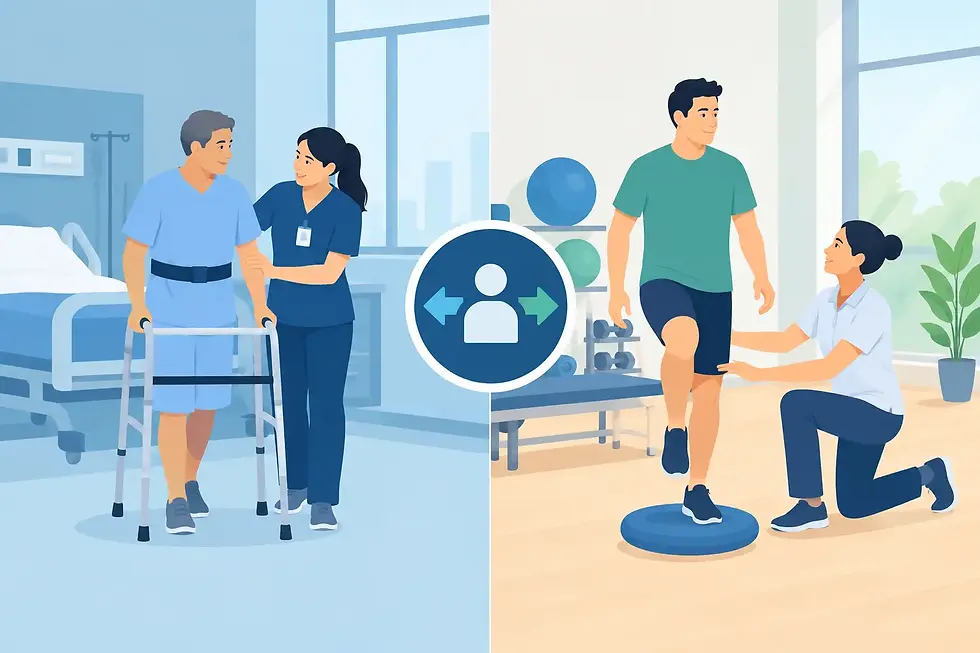
The next stage may take place in an inpatient rehab unit, a skilled nursing setting, outpatient therapy, or home-based care. This is where recovery plans become more individualized. Some patients need intensive daily therapy. Others need a slower schedule because of fatigue, heart conditions, severe weakness, or transportation barriers.
Later-stage rehabilitation is often the most neglected. This is when a person may be medically stable but still unable to live as independently as they want. They may walk with an uneven pattern, use one arm less, fear falling, or rely heavily on family for daily tasks. At this point, the goal shifts from basic recovery to functional rebuilding - improving endurance, reducing compensation patterns, managing pain, and restoring confidence in real-life activities.
The core therapies used in post-stroke recovery
Physical therapy is often central because stroke commonly affects walking, balance, transfers, posture, and limb control. A good physical therapy plan does more than build strength. It addresses how a person moves, where they compensate, whether muscles are becoming stiff or spastic, and how safely they can navigate their home and community.
Occupational therapy focuses on daily life. That includes dressing, bathing, cooking, writing, reaching, hand use, and other tasks that determine whether someone can function independently. This work is especially important when the survivor has one-sided weakness, poor coordination, sensory loss, or neglect of one side of the body.
Speech therapy is not only for speech. It may also address language comprehension, word finding, cognition, memory strategies, and swallowing safety. Some survivors speak clearly but struggle to process conversation or organize thoughts. Others can think clearly but cannot express themselves easily. These are different problems and need different therapy approaches.
Depending on symptoms, rehabilitation may also include pain management, edema control, soft tissue work, caregiver education, and guided exercise for long-term mobility. For many stroke survivors, these supports are not optional extras. They are what make continued recovery possible.
What families should expect from the recovery timeline
People often ask how long stroke recovery takes. The honest answer is that it depends. The first three months can bring rapid gains because the body is healing and the brain is actively reorganizing. But that does not mean recovery ends after that window.
Some abilities return quickly, while others take sustained work. Walking a short distance may come before hand function. Speech may improve faster than balance, or the reverse. Fatigue can also distort expectations. A person may look physically better but still lack the stamina to manage a full day safely.
Families should also expect uneven progress. A good week may be followed by a difficult one. Illness, poor sleep, pain, depression, and missed therapy can all affect performance. That does not always mean the person is declining. It may mean the rehabilitation plan needs adjustment.
The challenges that can slow progress
A strong guide to post stroke rehabilitation has to be honest about barriers. Transportation problems, insurance limits, caregiver burnout, untreated pain, and delayed follow-up care can all interfere with outcomes. So can depression and isolation, which are common after stroke and often underrecognized.
Pain deserves special attention. Shoulder pain, muscle tightness, joint stiffness, low back pain, and poor positioning can make a patient avoid movement. When movement decreases, function often declines further. That is why pain control should be part of rehabilitation, not treated as a separate issue to handle later.
Another challenge is doing too little or too much. Some survivors are pushed into exercises that are not well matched to their condition. Others are told to rest so much that they lose valuable recovery time. Effective rehabilitation finds the middle ground - enough challenge to promote change, enough support to prevent injury and discouragement.
How to tell if a rehab plan is working
A useful rehabilitation plan should produce functional change, not just completed appointments. That change may look like standing with less assistance, walking more safely, getting in and out of bed more easily, using the affected hand more often, or communicating with less frustration.
The plan should also be specific. General advice to exercise more is not enough for a stroke survivor with spasticity, foot drop, sensory loss, or swallowing concerns. Patients deserve clear goals, measurable progress, and treatment that matches the problems still limiting their daily life.
It is also reasonable to ask whether care is coordinated. If a patient has mobility deficits, pain, and trouble with self-care, those issues should not be handled in isolation. Rehabilitation works best when providers understand the whole picture and build around the person’s long-term function, not just a short referral window.
Why access matters as much as treatment
For underserved families, the problem is often not motivation. It is access. Specialized therapy can be expensive. Sessions may be too short, too limited, or too difficult to continue. Yet delayed or interrupted rehabilitation can lead to preventable disability, greater caregiver strain, falls, and worsening chronic pain.
That is why community-based, affordable rehabilitation matters. Organizations like CAMED exist to help bridge the gap between hospital discharge and meaningful functional recovery, especially for patients whose needs continue long after standard systems have moved on. For many families, that bridge can determine whether a survivor remains dependent or begins rebuilding daily life with confidence.
What patients and caregivers can do now
Start by focusing on function, not perfection. Ask what activities matter most right now - safe walking to the bathroom, getting dressed, climbing steps, eating without choking, using the hand, or reducing pain during movement. Those priorities should shape the rehabilitation plan.
Keep the environment as safe and consistent as possible. Practice should be regular, but it should also be realistic. Small, repeated efforts done correctly often matter more than occasional bursts of exhausting activity. Caregivers should be taught how to assist without creating more strain or reinforcing poor movement patterns.
Most of all, do not mistake a long recovery for a hopeless one. Stroke rehabilitation is often slower, harder, and less linear than families expect. But when therapy is skilled, persistent, and accessible, recovery can keep moving forward in ways that restore dignity, function, and hope.
The next right step after stroke is rarely waiting - it is getting the right help, at the right time, with a plan built for the life the patient still wants to live.


Comments