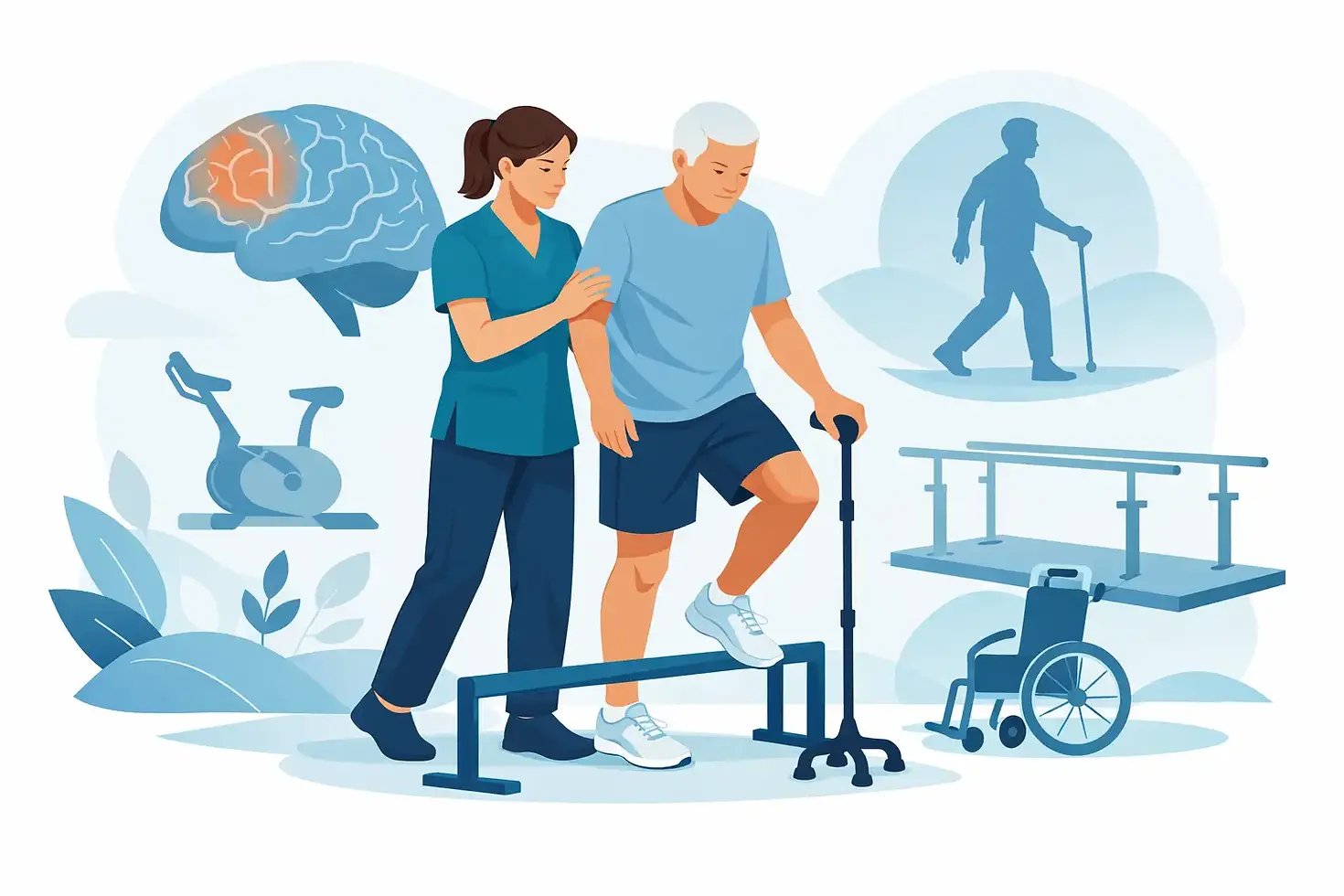
Post Stroke Mobility Rehabilitation That Works

The hardest part for many stroke survivors is not the hospital stay. It is what happens after discharge, when the goal shifts from survival to living again. Post stroke mobility rehabilitation is the work of rebuilding walking, balance, transfers, strength, coordination, and confidence - often after formal inpatient care has already ended and long before recovery feels complete.
For patients and families, this stage can feel confusing and urgent at the same time. A person may be medically stable but still unable to walk safely across a room, get up from a chair without help, or manage the stairs at home. That gap matters. Mobility is not a small quality-of-life issue. It affects fall risk, pain, caregiver strain, independence, and whether someone returns to work, community life, or daily routines.
Why post stroke mobility rehabilitation matters so much
After a stroke, the body does not simply "bounce back" with rest. Muscles can weaken. Joints can stiffen. One side of the body may become difficult to coordinate. Some people develop spasticity, foot drop, or persistent balance problems. Others can technically walk, but only with such poor mechanics that every step is tiring, painful, or unsafe.
This is why post stroke mobility rehabilitation must be active, structured, and specific. The brain and nervous system can adapt, but they need repeated, meaningful practice. Recovery is often driven by neuroplasticity - the brain's ability to form new pathways - yet that process depends on consistent movement training, not wishful thinking.
There is also a timing issue. Early rehabilitation is valuable, but recovery does not stop after the first few weeks or months. Many people continue to improve long after insurance visits run out or standard rehab ends. Progress may slow, and it may not look dramatic from week to week, but targeted therapy can still change function, safety, and daily independence.
What effective post stroke mobility rehabilitation usually includes
The right plan depends on the person, the location and severity of the stroke, and the obstacles that remain. Still, most effective rehabilitation programs focus on a core set of mobility needs.
Walking retraining
Walking is more than moving the legs forward. It requires weight shifting, trunk control, timing, foot clearance, endurance, and balance. A survivor may compensate by hiking the hip, dragging the toes, locking the knee, or leaning heavily to one side. These patterns can help in the short term but create new problems over time.
Therapy should look closely at gait quality, not just distance. Sometimes the first goal is safer household walking. In other cases, the goal is community mobility, longer distances, or returning to work. The treatment approach may include overground gait practice, treadmill training, cueing, strengthening, or exercises that target step symmetry and control.
Balance and fall prevention
Many stroke survivors fear falling, and that fear is reasonable. Even when strength improves, standing balance and reactive control may remain impaired. A person may lose stability during turning, stepping backward, or reaching outside their base of support.
Balance training needs to reflect real life. Standing still is not enough. Patients often need guided practice with changing surfaces, transfers, directional changes, and tasks that challenge both attention and body control. Fall prevention also includes home safety, proper device use, and realistic pacing.
Transfers and everyday movement
Mobility is not just walking. Getting out of bed, standing up from a toilet, stepping into a shower, and getting in and out of a car all place different demands on the body. A patient may walk short distances but still struggle with these transitions.
That is why practical transfer training matters. It restores more than movement. It restores privacy, dignity, and less dependence on family members for basic tasks.
Strength, flexibility, and joint protection
Weakness after stroke often shows up in uneven ways. The leg may feel heavy. The ankle may not clear the floor. The hip may not stabilize well during stance. At the same time, reduced movement can lead to tightness in the calf, hamstrings, hip flexors, or shoulder and trunk muscles.
A strong rehabilitation plan addresses both weakness and stiffness. If one is ignored, the other often gets worse. Building strength without addressing tightness may reinforce poor mechanics. Stretching without functional training may not carry over into daily movement.
The biggest mistake in stroke recovery
One of the most common problems is assuming that if progress is slow, recovery is over. It is not unusual for stroke survivors to be told, directly or indirectly, to accept a lower level of function than they may actually be capable of reaching with continued care.
The truth is more nuanced. Not every person will regain the same level of mobility. Some will need canes, walkers, braces, or long-term adaptations. Some goals will need to shift. But "it depends" should never mean "stop trying." It should mean the rehabilitation plan needs to be more individualized.
Another mistake is treating mobility in isolation from pain. Many stroke survivors develop secondary pain from compensation, inactivity, poor alignment, or overuse on the stronger side. If pain is ignored, participation drops. If participation drops, mobility often declines further. Recovery works better when movement limitations and pain are addressed together.
When progress stalls, the plan may need to change
Plateaus happen, but they are not always true plateaus. Sometimes they reflect the wrong intensity, the wrong exercises, inconsistent follow-through, untreated stiffness, poor footwear, fear of falling, or a home environment that does not support safe practice.
This is where skilled reassessment matters. A patient who has been told to "keep doing exercises" may need something much more precise. Are they strong enough but lacking coordination? Are they mobile enough in the clinic but not at home because of clutter, stairs, or fatigue? Is the problem balance, endurance, or confidence? Small distinctions can change outcomes.
For many families, the deeper frustration is access. Hospital-based rehab may end before function is restored. Insurance limitations can narrow options. Patients with limited income may postpone care until setbacks become severe. That care gap is one reason community-based rehabilitation support matters so much, especially for underserved households.
What patients and families should look for in rehabilitation
Good stroke rehabilitation should feel purposeful. Patients deserve to know what they are working on, why it matters, and how it connects to daily life. Therapy should not be generic or passive. It should be measured against meaningful goals such as safer walking at home, climbing steps, standing to cook, or getting back into community routines.
Families should also expect honesty. Recovery is rarely linear. Some weeks bring visible gains. Others bring fatigue, frustration, or setbacks. A strong care team does not offer false promises. It offers structure, skilled guidance, and a plan that respects both limitations and potential.
The best programs also understand that mobility recovery is emotional. Losing the ability to walk normally, drive, work, or move freely can be devastating. People are not only rebuilding muscle control. They are rebuilding identity and confidence. Compassion is not extra in this process. It is part of effective care.
A long-term view of post stroke mobility rehabilitation
Post stroke mobility rehabilitation is not a quick fix. It is a long-term investment in safety, function, and independence. Some people need intensive early treatment. Others need a later phase of focused rehabilitation after realizing that discharge did not mean full recovery. Both are valid.
What matters is not whether recovery looks perfect. What matters is whether the person is moving toward more freedom, less risk, and better participation in life. That may mean walking without assistance. It may mean walking with better balance and less effort. It may mean preventing decline, reducing caregiver burden, and making daily tasks possible again.
At CAMED, this stage of recovery matters because too many patients are left in the space between emergency care and true functional healing. Stroke survivors deserve more than basic survival. They deserve a real chance to stand, walk, move, and live with greater independence.
If mobility after stroke still feels limited, painful, or unsafe, do not treat that as the final answer. With the right support, careful reassessment, and consistent rehabilitation, meaningful progress can still be on the table.


Comments