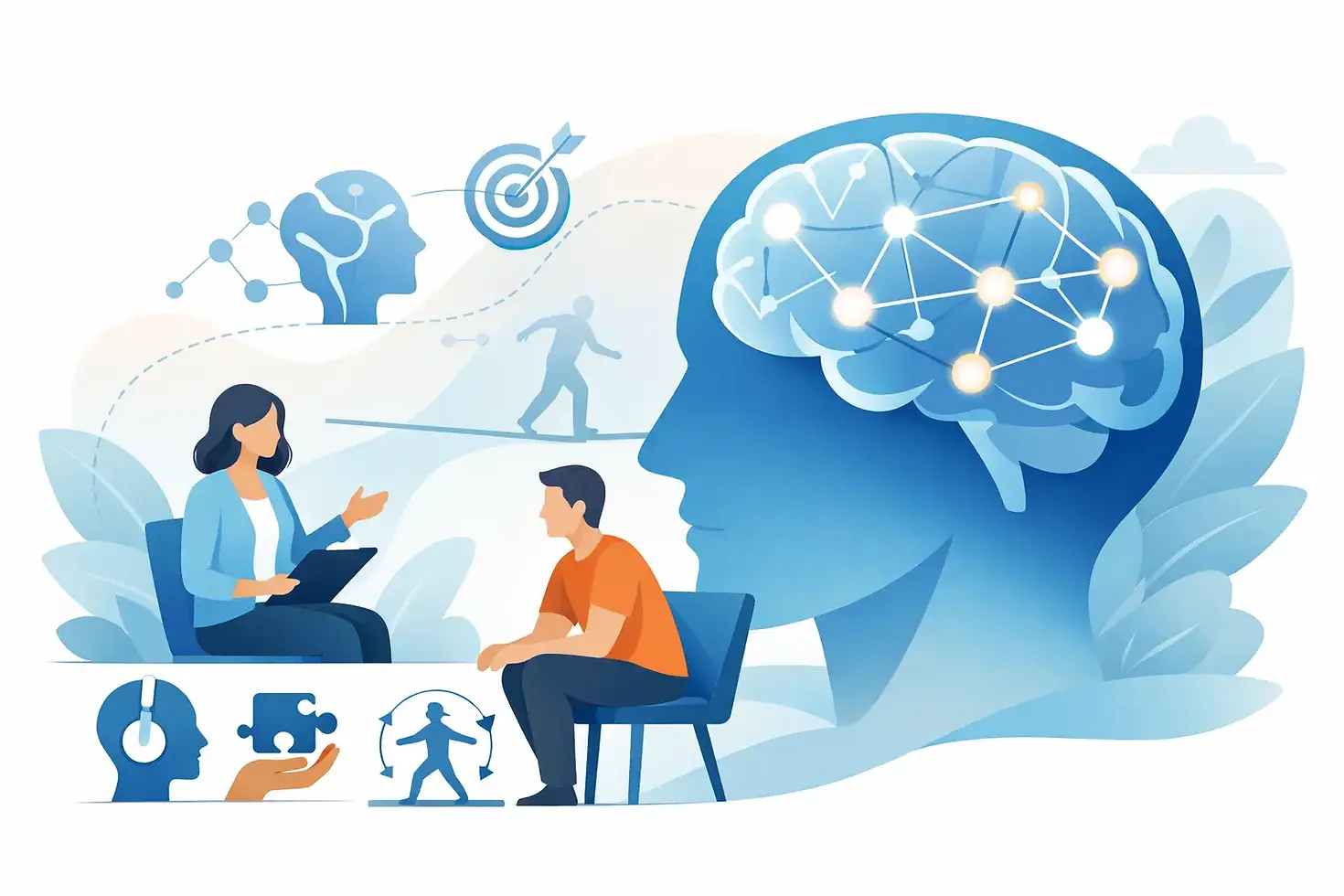
Brain Plasticity Rehabilitation Therapy Explained

A hand that will not open, a leg that drags, a word that stays trapped in the throat - these are not always signs that recovery has ended. Often, they are signs that the brain still needs the right kind of challenge. Brain plasticity rehabilitation therapy is built on that principle: the nervous system can adapt, reorganize, and form new pathways when treatment is specific, repeated, and meaningful.
For many patients, the hardest part comes after discharge. The hospital stabilizes the crisis. Standard rehab may cover the early phase. But lingering weakness, pain, balance problems, stiffness, and loss of independence can continue for months or years. That gap is where focused rehabilitation matters most, because function is not restored by time alone.
What brain plasticity rehabilitation therapy really means
Brain plasticity, also called neuroplasticity, is the brain's ability to change in response to experience. After stroke, traumatic brain injury, chronic pain, nerve injury, or prolonged immobilization, the brain does not simply switch back to normal on its own. It adapts based on what it is asked to do repeatedly.
That adaptation can help or hurt. If a person stops using one arm because it feels weak or clumsy, the brain may reinforce that non-use. If pain causes guarded movement for months, the nervous system may become more efficient at producing pain and stiffness than relaxed, coordinated motion. Rehabilitation tries to interrupt those harmful patterns and replace them with more useful ones.
This is why therapy is not just exercise. It is training for the brain through the body. The goal is to give the nervous system the kind of input that supports safer movement, better control, stronger communication between brain and muscles, and more confidence in daily life.
Why timing matters, but late recovery is still possible
People are often told they have a narrow recovery window. There is some truth in that. Early rehabilitation matters because the brain is highly responsive after acute injury, especially in the first weeks and months. Starting treatment early can reduce complications and improve the odds of regaining function.
But that does not mean progress ends after a deadline. Patients can still improve long after stroke or neurological injury, especially when care is targeted and consistent. The pace may be slower. Gains may come in smaller steps. Yet better walking, improved hand use, clearer speech, lower pain, and greater independence can still happen well beyond the early stage.
That message matters for families who have been told to simply accept decline. It also matters for adults living with chronic pain or long-term mobility loss, because the nervous system remains changeable across the lifespan.
How brain plasticity rehabilitation therapy works in practice
Effective therapy uses repetition, but not mindless repetition. The brain responds best when a task is challenging enough to require attention and specific enough to match real-life goals.
A patient recovering from stroke may practice weight shifting, standing transitions, gait training, and reaching with the affected arm. Someone with chronic pain may work on graded movement, posture, breathing control, sensory retraining, and restoring tolerance for normal activity. A person with balance problems may train visual tracking, trunk control, stepping reactions, and confidence during turning or uneven surfaces.
The principle is the same across conditions: use the impaired function in a structured way, repeat it often, and build from simple tasks to more complex ones. When done well, this helps the brain assign more resources to the movement patterns that support daily living.
Hands-on care can also play an important role. For some patients, severe stiffness, swelling, pain, or muscle guarding prevents useful practice. Manual therapy, soft tissue work, positioning, and guided movement can reduce barriers so active retraining becomes possible. This is where rehabilitation should be individualized, because the right plan for one patient may overwhelm another.
Brain plasticity rehabilitation therapy after stroke
Stroke is one of the clearest examples of why neuroplasticity-based care matters. The brain injury may be sudden, but the recovery is ongoing. Weakness on one side, spasticity, poor coordination, sensory loss, and speech or swallowing changes can all interfere with basic life.
Therapy after stroke is not only about muscle strength. A stronger muscle is not enough if the brain cannot recruit it at the right time. Patients often need repeated practice for sit-to-stand transfers, arm activation, stepping, turning, hand opening, and task sequencing. The affected side has to be invited back into movement, even when it feels frustratingly slow.
This is also where patient education matters. Families may try to help by doing everything for their loved one. Sometimes that is necessary, but too much assistance can reduce opportunities for recovery. Safe support is important. So is giving the brain a reason to keep working.
Chronic pain and the brain's role in recovery
Brain plasticity rehabilitation therapy is not limited to obvious neurological injury. Chronic pain changes the nervous system too. Over time, the brain can become more reactive to normal movement, normal touch, or even the anticipation of activity. This does not mean the pain is imaginary. It means the system has become sensitized.
That is why long-term pain care should include nervous system retraining, not only rest, injections, or medication. Patients often benefit from a program that combines movement re-education, desensitization, pacing, breathing, body awareness, and gradual exposure to feared or avoided activities.
The trade-off is that this work takes patience. There is rarely a single-session fix for pain that has been reinforced for years. But when therapy addresses both tissue limitations and nervous system patterns, patients often regain more than symptom relief. They regain trust in their body.
What good rehabilitation should include
A strong rehabilitation plan starts with a careful assessment, not assumptions. The therapist should look at movement quality, sensation, pain behavior, balance, endurance, functional goals, and the barriers that keep the patient from practicing well.
Treatment should then be tied to meaningful outcomes. It is one thing to improve range of motion on a table. It is another to help someone get out of bed safely, return to work, use the bathroom without assistance, hold a grandchild, or walk to the kitchen without fear of falling. Real recovery is functional.
Good therapy also adjusts over time. If a patient is too fatigued, too painful, or too guarded, pushing harder is not always smarter. On the other hand, care that stays too passive for too long can stall progress. The best plans find the line between protection and challenge.
This is especially important for underserved patients, who are often offered either minimal follow-up or one-size-fits-all treatment. Recovery should not depend on income, and neither should access to skilled, ongoing care.
What patients and families can realistically expect
Hope matters, but honest expectations matter too. Brain plasticity rehabilitation therapy can improve function, but results depend on the diagnosis, severity of impairment, consistency of treatment, home practice, overall health, and time since injury. Some patients regain major independence. Others make smaller gains that are still life-changing, such as safer transfers, less pain, better hand positioning, or fewer falls.
Progress is rarely linear. One week may bring a breakthrough. The next may feel flat. That does not always mean the therapy has failed. The nervous system learns through repetition, setbacks, and consolidation. What matters is whether the plan is still connected to function and whether the patient is being supported to keep moving forward.
For many families, the most meaningful change is not perfection. It is being able to do more with less help, less fear, and less pain.
When to seek help
If movement, speech, balance, pain, or daily function remain limited after stroke, injury, surgery, or chronic illness, waiting passively can deepen the problem. Early help is ideal, but delayed help is still worthwhile. Persistent disability deserves skilled attention.
A nonprofit clinic like CAMED can be especially important for patients caught between hospital discharge and full recovery, or for families priced out of long-term specialty care. Access changes outcomes. When treatment is affordable, consistent, and clinically guided, more people have a real chance to rebuild function rather than simply manage loss.
Recovery is not only about surviving the event that changed your health. It is about teaching the brain and body how to live again, one repeated, purposeful movement at a time.


Comments