
Non Surgical Rehab Program Review for Lasting Relief

A non surgical rehab program review should answer a practical question: can this care help you move, work, sleep, and live with less limitation without rushing toward an operation? For people living with chronic pain, stiffness after an injury, post-stroke impairment, or declining mobility, that question is not academic. It can shape independence, household income, caregiving needs, and quality of life.
The strongest programs do not sell a one-size-fits-all cure. They identify what is limiting function, provide skilled hands-on and movement-based care, measure progress, and adjust the plan when the body is not responding as expected. They also know when conservative care is appropriate and when a medical or surgical evaluation cannot wait.
What a Non Surgical Rehab Program Should Actually Do
Non-surgical rehabilitation is not simply a few exercises handed over at the end of an appointment. A meaningful program is a coordinated plan designed to reduce barriers to movement and build capacity over time. Depending on the condition, care may address pain patterns, joint and soft-tissue restrictions, muscle weakness, balance problems, swelling, gait changes, nerve sensitivity, and the fear of movement that often develops after months or years of pain.
For someone with persistent back, neck, shoulder, hip, or knee symptoms, the goal may be to restore safer movement and make daily tasks more manageable. For a stroke survivor, the work may center on mobility, coordination, strength, and the ability to participate in everyday life. For a person with lymphatic concerns or long-term swelling, therapy may focus on comfort, tissue health, mobility, and self-management.
The key word is function. Pain scores matter, but a program should also ask whether you can stand long enough to cook, get in and out of a car, return to work duties, climb stairs, or walk through your neighborhood with greater confidence. A person can have imaging findings and still improve substantially with the right conservative care. At the same time, a normal scan does not mean the pain or disability is not real.
Non Surgical Rehab Program Review: Signs of Quality Care
When reviewing a program, begin with the assessment. A clinician should take time to understand your history, current symptoms, medical diagnoses, previous treatments, medications, work demands, and personal goals. A rushed visit that moves immediately to a generic treatment package may not account for the real source of your limitation.
Quality care also includes a clear explanation. You should leave knowing what the clinician believes may be contributing to your symptoms, what treatment is intended to change, and what progress could reasonably look like. No ethical provider can promise that every patient will avoid surgery or become pain-free. They can, however, explain the plan, the expected timeline, and the signs that would require a different level of care.
Look for four practical markers:
Individualized treatment: Your plan reflects your condition, tolerance, health history, and goals rather than a standard sequence used for every patient.
Skilled progression: Care starts at a level your body can tolerate and progresses as mobility, strength, coordination, or endurance improve.
Measurable outcomes: The program tracks meaningful changes, such as walking distance, range of motion, balance, swelling, work tolerance, or the ability to complete daily activities.
Coordination and referrals: Providers recognize red flags and communicate the need for medical, imaging, neurological, or surgical evaluation when appropriate.
Accessibility belongs in any honest review. Chronic pain often lasts longer than insurance authorizations, job schedules, or family budgets allow. A program may be clinically strong but still out of reach if patients cannot afford enough visits to benefit. Ask about sliding-scale options, financial assistance, payment plans, and realistic home strategies that support treatment between appointments.
When Conservative Rehabilitation May Be a Good First Step
A non-surgical program may be especially valuable when pain and disability persist after an emergency room visit, hospital discharge, injection, or brief course of standard therapy. Many people are told they are medically stable, yet remain far from functional recovery. They may still struggle with guarding, weakness, limited range of motion, poor balance, swelling, or pain that interrupts sleep and daily life.
Conservative rehabilitation can also be a reasonable first step for many musculoskeletal concerns when there is no urgent threat to nerve function, circulation, or overall health. It can help patients prepare for surgery if surgery later becomes necessary, since stronger movement patterns and better conditioning can support recovery afterward.
But “non-surgical” should never mean “ignore serious symptoms.” Seek prompt medical evaluation for new bowel or bladder changes, sudden or progressive weakness, loss of coordination, chest pain, shortness of breath, fever with severe symptoms, a hot swollen joint, unexplained weight loss, or severe pain after major trauma. A responsible rehabilitation provider will not minimize these warning signs.
Questions to Ask Before You Commit
Before starting, ask who will perform your care and what training or experience they have with your specific condition. Ask how often visits are recommended, how long the initial plan lasts, and how the team decides whether treatment is working. You deserve direct answers, not pressure to purchase a large package before your needs have been assessed.
It is also useful to ask what happens if progress slows. The answer should include reassessment, modification of the plan, coordination with your physician, or referral when needed. Good rehabilitation is responsive. It does not blame patients for every setback or keep repeating treatment that is not producing meaningful change.
Ask about your role between visits as well. Home recommendations should be realistic for your energy, pain level, housing situation, and responsibilities. A plan that requires expensive equipment, hours of daily exercise, or movements that sharply worsen symptoms may not be sustainable. Consistency matters, but the plan has to fit a real life.
The Value of Care That Sees the Whole Recovery Gap
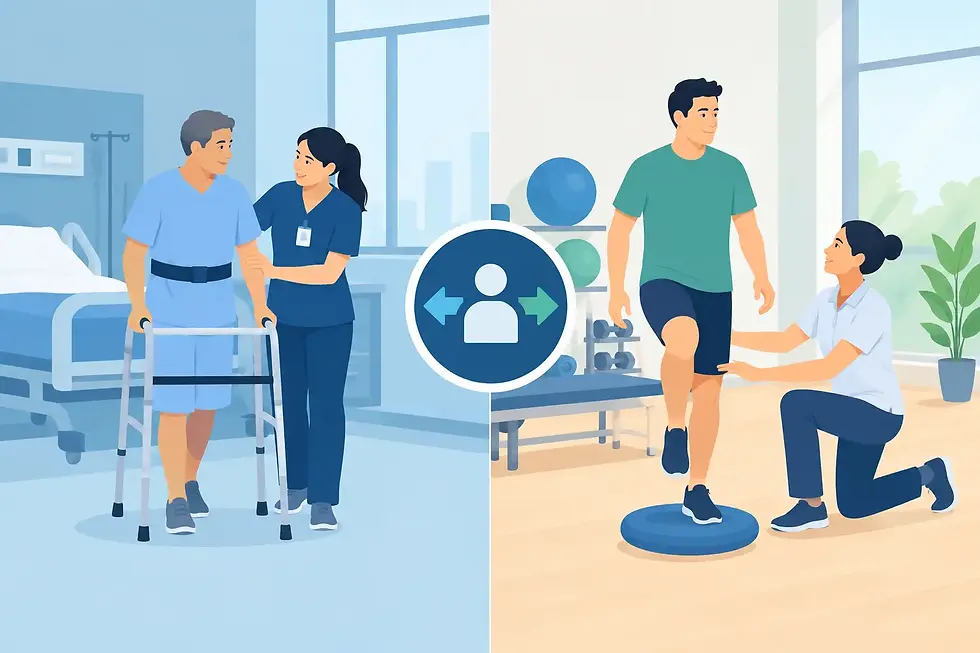
The recovery gap is where many people get lost: after the crisis has passed but before independence has returned. This is where specialized non-surgical care can make a profound difference. It recognizes that a person may no longer need emergency treatment while still needing skilled help to move safely, manage pain, prevent further decline, and return to meaningful roles.
At CAMED, this gap is central to the mission. Advanced therapeutic care is paired with a commitment to affordability, because recovery should not depend solely on income, insurance limits, or the ability to travel from provider to provider. For underserved patients and families, access to consistent, knowledgeable care can be the difference between adapting to disability and building a path back toward independence.
The best program is not necessarily the one that makes the biggest promise. It is the one that listens carefully, treats you with clinical seriousness, explains the choices in front of you, and works toward outcomes that matter in your daily life. If pain has narrowed your world, a thoughtful non-surgical rehabilitation plan may be the next practical step toward widening it again.


Comments