
Top Mobility Therapies for Adults That Restore Movement

When getting out of a chair, walking through a grocery store, or reaching for a pan becomes painful or uncertain, mobility loss can quickly shrink a person’s world. The top mobility therapies for adults are not one-size-fits-all exercises or a promise of instant relief. They are targeted, clinically guided approaches that address the pain, weakness, stiffness, balance changes, and neurological barriers standing between a person and daily independence.
For many adults, the problem begins after an injury, surgery, stroke, hospital stay, or years of living with chronic pain. Others have been told to rest, take medication, or simply “live with it,” even as movement becomes harder. Effective therapy looks beyond the painful body part. It asks what is limiting function, what can be safely improved, and what support will help recovery last.
Why Mobility Declines in Adults
Mobility is more than flexibility. It depends on joint motion, muscle strength, balance, coordination, nerve function, circulation, confidence, and the ability to manage pain. A stiff knee may alter how someone walks. That altered gait can stress the hip and lower back. Fear of falling can then lead to less activity, more weakness, and even greater fall risk.
Chronic conditions can add another layer. Arthritis, diabetes-related nerve changes, post-stroke weakness, lymphedema, spinal conditions, and long periods of inactivity can all affect the way an adult moves. This is why the right therapy plan should focus on meaningful goals: walking safely at work, climbing stairs at home, returning to caregiving, or moving without relying so heavily on others.
Top Mobility Therapies for Adults: What Works and Why
The best approach depends on the source of limitation, a person’s medical history, and the activities they want to regain. In many cases, progress comes from combining therapies rather than relying on a single method.
Therapeutic Exercise and Functional Strengthening
Therapeutic exercise is often the foundation of mobility recovery. Unlike a general workout, it is selected and progressed to address a specific limitation. Someone with knee pain may need hip and quadriceps strengthening to improve control during stairs. Someone recovering from a long hospital stay may begin with sit-to-stand practice, short walks, and gentle endurance work.
The goal is not to push through severe pain. It is to give muscles, joints, and the nervous system safe, repeated exposure to movement. Gradual strengthening can improve walking tolerance, joint stability, posture, and confidence. It also helps adults protect the gains they make during hands-on treatment.
Manual Therapy for Pain and Stiffness
Manual therapy uses skilled, hands-on techniques to address restricted soft tissue, joint stiffness, scar tissue, and painful movement patterns. Depending on the clinical need, a provider may use soft-tissue mobilization, joint mobilization, myofascial techniques, or guided stretching.
For a person whose shoulder has become stiff after injury or whose back pain has made bending difficult, hands-on care may make movement more comfortable enough to begin active rehabilitation. Manual therapy is most useful when it supports functional exercise, not when it becomes the only treatment. Relief that does not translate into stronger, safer movement may be short-lived.
Neurological Rehabilitation After Stroke or Nerve Injury
Post-stroke mobility care requires specialized attention. Weakness, spasticity, poor coordination, altered sensation, and balance changes can affect the arm, leg, trunk, or all of them at once. Rehabilitation may include task-specific practice such as stepping, reaching, transferring, and walking on varied surfaces. It can also involve balance training, gait retraining, positioning, and strategies for using the affected side more effectively.
Recovery is not limited to the first weeks after a stroke. While early treatment matters, adults who are months or years into recovery can still benefit from a structured plan that identifies current barriers and works toward practical goals. The pace varies widely, and progress may look like safer transfers, fewer falls, improved endurance, or greater independence at home.
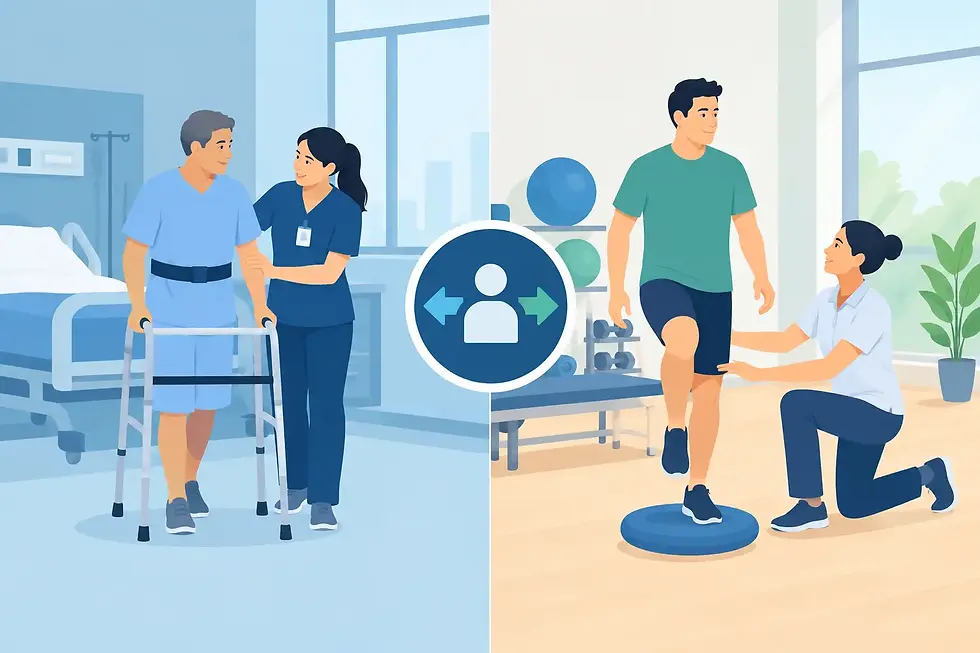
Balance and Gait Training
A fall can change a family’s life in seconds, but fear of falling can be just as limiting. Balance and gait training helps adults improve how they stand, turn, step over obstacles, use stairs, and respond when their body shifts unexpectedly.
This therapy should be specific. Standing on one foot may not be appropriate or useful for everyone. A person who loses balance while turning quickly in the kitchen needs a different strategy than someone whose legs fatigue after a short walk. A trained provider can assess footwear, assistive devices, walking patterns, strength, vision-related concerns, and the home environment. Sometimes a cane, walker, brace, or simple home modification is part of the answer, not a sign of failure.
Occupational Therapy for Daily Living
Mobility only matters if it helps a person live more fully. Occupational therapy focuses on the daily activities that pain or disability can disrupt: bathing, dressing, meal preparation, work tasks, driving-related movements, household routines, and caring for family.
An occupational therapist may recommend adaptive techniques, energy-conservation strategies, hand and arm rehabilitation, or home modifications that reduce unnecessary strain. For adults with arthritis, neurological conditions, or persistent upper-body limitations, this practical work can make the difference between avoiding daily tasks and doing them with greater safety and control.
Lymphatic Care When Swelling Limits Movement
Swelling is often overlooked as a mobility problem. Yet lymphedema and chronic edema can make an arm or leg feel heavy, tight, painful, and difficult to move. Specialized lymphatic care may include manual lymphatic techniques, compression guidance, skin-care education, movement, and self-management planning.
Care must be individualized, particularly for people with heart conditions, infection concerns, active cancer treatment, or complex medical histories. When appropriate, reducing swelling and improving tissue comfort can support walking, reaching, exercise, and everyday function.
Choosing the Right Therapy Plan
A good mobility plan begins with a thorough assessment, not a standard package of exercises. The clinician should ask where pain occurs, what movement is difficult, whether there have been falls, what diagnoses or medications may affect recovery, and which goals matter most to the patient.
It should also include a plan for the real world. If a treatment program requires three costly visits each week, but a patient cannot afford transportation or time away from work, the plan may not be sustainable. Affordable, consistent care is not a secondary concern. It is part of effective care.
At CAMED, specialized non-surgical therapeutic care is designed to help people bridge the gap between medical discharge and real functional recovery. That can mean addressing persistent pain after a procedure, rebuilding movement after stroke, or creating a manageable long-term plan for a condition that has been ignored for too long.
When Pain Requires Medical Attention First
Therapy is valuable, but new or severe symptoms need prompt medical evaluation. Seek urgent care for sudden weakness on one side of the body, facial drooping, speech changes, chest pain, severe shortness of breath, loss of bladder or bowel control, a fever with a hot swollen joint, or sudden inability to bear weight after a fall.
For ongoing symptoms, do not wait until mobility loss becomes a crisis. Increasing pain, repeated falls, worsening swelling, numbness, or a steady loss of independence are all reasons to request a clinical assessment. Earlier intervention may prevent compensations that become harder to reverse.
Recovery Needs a Plan That Fits Real Life
Mobility therapy works best when it respects the full person, not just a diagnosis. A working adult may need a plan that supports standing through a shift. An older adult may need safer transfers and confidence on stairs. A stroke survivor may be focused on using one hand at the dinner table or walking across the room without fear.
The right next step is a qualified evaluation, a clear functional goal, and care that a person can continue long enough to matter. Pain may have changed the boundaries of daily life, but with skilled support and a realistic plan, those boundaries do not have to stay fixed.


Comments