
Stroke Rehab vs Homecare for Lasting Recovery

A stroke can change everyday life in an instant. Walking to the bathroom, preparing a meal, finding the right word, or using one hand to button a shirt may suddenly require help. For families facing stroke rehab vs homecare, the question is not simply where care happens. It is whether the person recovering is receiving enough skilled support to regain function, prevent complications, and live as independently as possible.
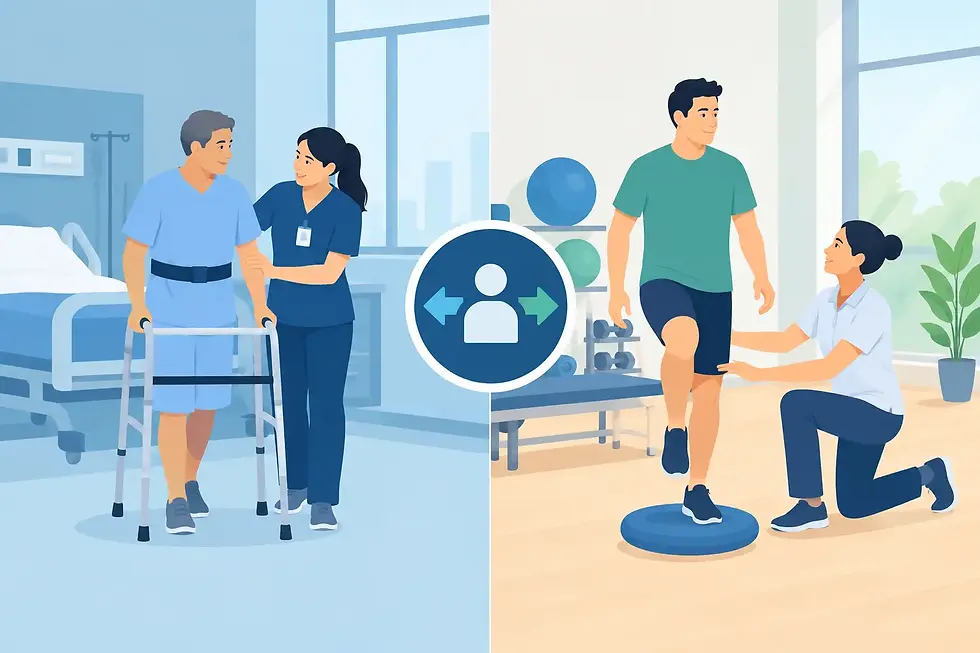
The best answer is often not an either-or decision. Rehabilitation and home care serve different needs, and a recovery plan may require both at different stages. Understanding that distinction can protect a survivor from being discharged into a level of support that keeps them safe for the moment but does not move them forward.
Stroke Rehab vs Homecare: The Essential Difference
Stroke rehabilitation is active, goal-driven treatment. It is designed to help a person rebuild skills affected by stroke, such as mobility, balance, strength, coordination, speech, swallowing, memory, and daily self-care. Depending on the person’s needs, rehabilitation may involve physical therapy, occupational therapy, speech-language therapy, medical oversight, and specialized hands-on care for pain, stiffness, or muscle dysfunction.
Homecare, sometimes called in-home care or caregiving support, is focused primarily on safety and daily living. A family member, home health aide, or caregiver may help with bathing, dressing, meals, medication reminders, transportation, light housekeeping, and supervision. This support can be essential, especially when a survivor cannot safely manage alone.
The distinction matters because assistance is not the same as rehabilitation. A caregiver may help someone transfer from a bed to a chair, while a rehabilitation professional works to improve the person’s ability to make that transfer with less help. Both are valuable. But when therapy ends too soon, caregiving can unintentionally become a substitute for regained function.
When Stroke Rehabilitation Should Lead the Plan
Rehabilitation should be a central priority when a stroke survivor has meaningful potential to improve movement, communication, self-care, or confidence in daily activity. Progress can continue long after the hospital stay, particularly when therapy addresses the specific barriers still limiting independence.
A person may need rehabilitation when they experience weakness on one side, poor balance, difficulty walking, shoulder pain, hand stiffness, swelling, fatigue with activity, or trouble using the affected arm. Rehabilitation is also important when fear of falling, pain, or frustration has caused the survivor to become less active. Reduced activity can quickly lead to deconditioning, joint stiffness, loss of endurance, and greater dependence.
Recovery is not always linear
Some survivors make rapid gains in the first weeks. Others improve slowly, plateau, and then progress again when their care plan changes. A person who can walk across a room may still be unsafe on stairs, unable to carry an object while walking, or unable to manage a shower independently. “Good enough” for discharge is not always good enough for life at home.
Effective stroke rehabilitation looks beyond a checklist of exercises. It connects treatment to real goals: getting out of bed without assistance, returning to work, preparing food, walking through a grocery store, caring for a spouse, or participating in the community again. These goals deserve skilled planning and consistent reassessment.
Pain and stiffness can slow recovery
Post-stroke pain, muscle tightness, shoulder problems, and swelling are often treated as secondary concerns. They are not. When pain limits movement, the survivor may stop using an arm, avoid walking, sleep poorly, or lose confidence. That can create a cycle of declining function.
Specialized non-surgical therapeutic care can be especially helpful when persistent pain, stiffness, or musculoskeletal dysfunction stands between a survivor and meaningful participation in rehabilitation. At CAMED, recovery support is built around the reality that many patients leave acute care with needs that have not disappeared simply because their hospital stay has ended.
When Homecare Is the Right Immediate Need
Homecare may be the most urgent need when a survivor cannot safely be left alone, needs help with personal care, has cognitive changes that affect judgment, or is at high risk for falls. It can also be crucial when family caregivers work outside the home, have their own health limitations, or need respite to avoid burnout.
Reliable home support can prevent missed meals, medication errors, unsafe transfers, isolation, and avoidable emergency visits. For a survivor with severe impairments, homecare may be necessary for the long term. There is no failure in needing help. Protecting safety and dignity is part of good care.
Still, families should ask what type of homecare is being offered. Non-medical caregiving, skilled home health services, and therapy delivered in the home are not interchangeable. A home health aide may provide personal assistance but not rehabilitation treatment. A visiting nurse may monitor medical needs but not retrain walking or arm use. Knowing the role of each provider helps families avoid dangerous gaps in care.
The Strongest Plan Often Combines Both
For many families, the practical choice is not stroke rehab versus homecare. It is how to use each service wisely.
Homecare can create the safety, routine, and supervision that make rehabilitation possible. Therapy can give caregivers safer ways to assist with transfers, walking, positioning, and home exercises. It can also reduce the physical and emotional burden on a spouse or adult child who has become the default caregiver overnight.
A combined plan may include rehabilitation visits or outpatient therapy, caregiver support at home, a home safety assessment, and a clear routine for practicing skills between sessions. The goal is not to keep a survivor busy with appointments. The goal is to make daily life more manageable, more mobile, and less dependent on constant assistance when improvement is possible.
Questions families should ask before choosing care
Before committing to a plan, ask the care team whether the survivor still has unmet rehabilitation goals. Ask what activities they can do alone, what requires supervision, and what requires physical assistance. Ask whether pain, weakness, communication challenges, or cognitive changes are limiting progress.
It is also wise to ask how care will change over time. Will the person receive regular reassessments? Is there a plan for preventing falls and protecting the shoulder? Can the caregiver be trained in safe techniques? What happens if insurance coverage ends before recovery needs do?
These questions are especially important for underserved households. Families should never have to choose between essential recovery support and basic financial stability. Sliding-scale and nonprofit care models can help close the gap when traditional coverage is limited, sessions are exhausted, or out-of-pocket costs make continued treatment feel impossible.
Choosing Based on Function, Not Convenience Alone
The least expensive or quickest option is not always the safest one, and the most intensive setting is not always necessary. The right level of care depends on stroke severity, medical stability, mobility, cognition, communication, the home environment, and the availability of reliable support.
A survivor who needs occasional reminders but can walk safely may benefit from outpatient rehabilitation and limited home support. Someone who cannot transfer safely, has frequent falls, or cannot manage personal care may need substantial homecare while rehabilitation addresses realistic functional goals. A person with severe communication or cognitive impairments may need a plan that places safety first while continuing therapy that supports participation and quality of life.
Families should also be honest about caregiver capacity. Love does not eliminate exhaustion, back injuries, financial strain, or the need for sleep. Professional support can preserve the relationship between survivor and caregiver by reducing the pressure to make one person responsible for every medical, physical, and emotional need.
Recovery Deserves More Than a Discharge Plan
Hospital discharge is a transition, not a finish line. If a stroke survivor is still struggling with pain, movement, balance, self-care, or confidence, there may be more work to do and more recovery to pursue. The right care plan should honor both safety today and greater independence tomorrow.
Start with a clear functional assessment, involve the survivor in setting meaningful goals, and seek help that matches the real barriers in front of them. A home can be a place of recovery, but recovery needs more than someone nearby. It needs skilled attention, consistent support, and a community willing to believe that progress remains possible.


Comments