
Pain Clinic vs Surgery: What to Choose

When pain starts taking over your work, sleep, and ability to move, the question becomes painfully practical: pain clinic vs surgery. Many people are told to wait, medicate, or consider an operation, yet they are rarely given a clear picture of what happens in between. That gap matters. It is often where recovery is either protected or lost.
For many adults living with chronic back pain, joint dysfunction, nerve irritation, post-stroke limitations, or lingering musculoskeletal problems, surgery is not the first or only answer. A pain clinic can offer focused, non-surgical care designed to reduce pain, restore function, and help people return to daily life with more strength and less dependence. At the same time, there are cases where surgery is appropriate and necessary. The real issue is not choosing a side. It is choosing the level of care that matches the condition, the risks, and the person.
Pain clinic vs surgery: the core difference
A pain clinic is generally built to manage pain and improve function without an operation. Depending on the clinic, treatment may include hands-on therapy, therapeutic exercise, movement retraining, rehabilitation support, and medical pain management strategies. The goal is not simply to mask symptoms. The goal is to identify what is driving pain, stiffness, weakness, or limited mobility and address it in a structured way.
Surgery works differently. It aims to repair, remove, stabilize, or reconstruct a physical problem inside the body. In the right case, surgery can be life-changing. It may relieve pressure on a nerve, fix severe structural damage, or correct a condition that will not improve through conservative care alone.
That distinction sounds simple, but real life is rarely simple. Many painful conditions sit in the gray area between emergency treatment and full recovery. A person may not need surgery, but they also may not improve with rest alone. That is where specialized pain care becomes essential.
When a pain clinic may be the better first step
If your pain has lasted for weeks or months, keeps returning, or is limiting your ability to work, walk, sleep, lift, or care for yourself, a pain clinic may be the more sensible first step. This is especially true when imaging findings sound alarming but symptoms do not clearly point to a surgical emergency.
Many people have disc bulges, arthritis, degeneration, or joint changes on scans. Not all of those findings require an operation. What matters is whether the condition is creating serious structural compromise, progressive neurologic loss, or a failure of conservative treatment over time.
A high-quality pain clinic looks at more than the scan. It looks at movement patterns, tissue restrictions, muscle guarding, balance, postural strain, prior injuries, and the way pain is affecting function. For chronic pain patients, that broader view is often the difference between temporary symptom relief and meaningful recovery.
This approach can be especially valuable for people recovering from stroke, dealing with persistent neck or back pain, living with joint stiffness, or trying to avoid a cycle of medication dependence. In these cases, function matters as much as pain scores. If you cannot bend, grip, stand, reach, or walk well, then the treatment plan has to address your whole recovery, not just your discomfort.
When surgery may be necessary
There are situations where delaying surgery is the wrong choice. Severe trauma, fractures, infection, certain tumors, rapidly worsening neurologic symptoms, bowel or bladder changes linked to spinal compression, or major structural damage may require urgent surgical evaluation.
Surgery may also be appropriate when conservative treatment has been thorough and consistent, but pain and disability remain severe. Some people have clear mechanical problems that are unlikely to improve enough through therapy alone. In those cases, surgery can create the stability or decompression needed for recovery to move forward.
Still, surgery is rarely the end of the story. Even successful operations usually require rehabilitation afterward. Strength, mobility, coordination, circulation, and pain control still need to be rebuilt. That is one reason the decision should never be framed as surgery versus recovery. Surgery, when needed, is often one phase of recovery.
The trade-offs people deserve to understand
The strongest argument for surgery is that it may directly address a structural problem. The strongest argument for a pain clinic is that non-surgical care carries fewer major procedural risks and can often improve function without removing, fusing, or altering tissue.
Surgery comes with anesthesia risk, recovery time, cost, scar tissue, and the possibility that pain may improve less than expected. Some operations are highly effective for the right diagnosis. Others help only part of the problem, especially when pain has become chronic and involves both tissue damage and nervous system sensitization.
Pain clinic care also has limits. It can require time, consistency, and active participation. Results may build gradually rather than all at once. And if the clinic is not skilled in complex recovery cases, treatment may become generic instead of targeted.
That is why the real comparison in pain clinic vs surgery is not fast versus slow or serious versus conservative. It is precision versus assumption. The right path depends on whether the pain is being driven by something that truly needs an operation or by a combination of dysfunctions that respond better to specialized non-surgical care.
Questions to ask before deciding
Before moving toward surgery, patients should ask whether they have completed a meaningful course of conservative care, not just a few visits or general advice to stretch. They should ask what specific diagnosis surgery is meant to fix, what outcome is realistically expected, and what happens if surgery reduces the structural issue but not the pain experience.
It is also worth asking whether there are signs of muscle inhibition, movement compensation, soft tissue restriction, chronic inflammation, or post-hospital deconditioning that could be addressed first. These problems are common, and they often keep people disabled long after the original injury or medical event.
For families under financial pressure, cost matters too. Surgery can be expensive before, during, and after the procedure. Time away from work, transportation, caregiving needs, and prolonged recovery can place a heavy burden on households already stretched thin. Accessible non-surgical care can make recovery possible earlier, not only medically but practically.
Why timing matters in pain clinic vs surgery decisions
Waiting too long to seek the right care can make both options harder. Chronic pain changes behavior. People move less, compensate more, lose strength, and start organizing daily life around avoidance. That creates a second layer of disability that may persist even if the original issue is treated later.
This is one reason early, specialized pain care matters. It can prevent pain from becoming the center of a person’s life. It can protect mobility, reduce fear of movement, and keep recovery moving before decline becomes entrenched.
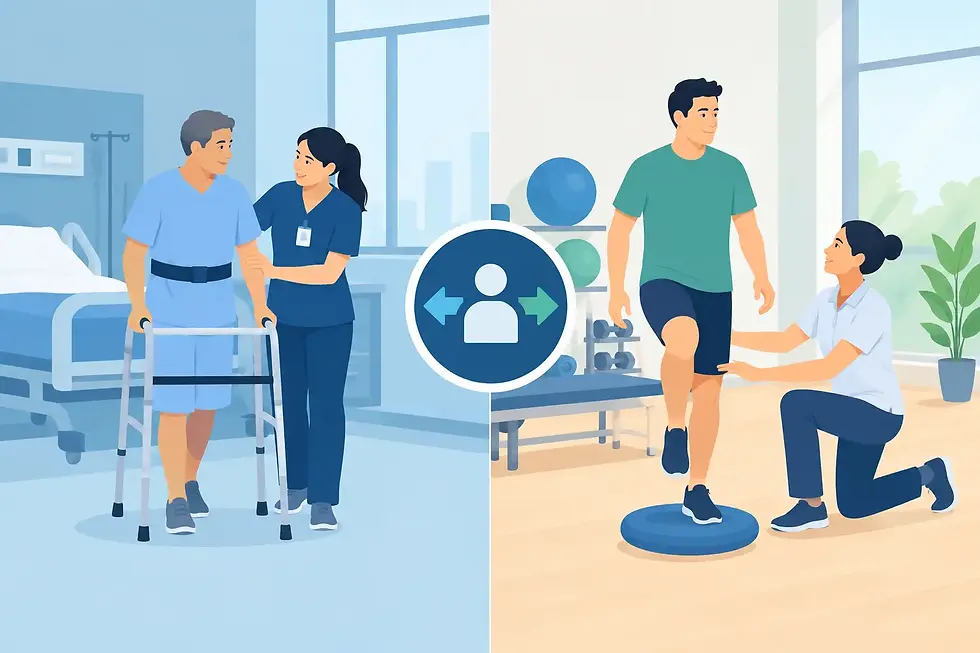
For patients who have already been through emergency care, hospitalization, or standard outpatient visits and still feel stuck, this middle stage of treatment is often what has been missing. A mission-driven pain clinic can serve as the bridge between discharge and real functional recovery, especially for people who need serious care but cannot easily access endless specialist visits or high-cost procedures.
What a strong non-surgical plan should include
A real treatment plan should be individualized. It should explain what is causing the pain, what function has been lost, and how treatment will help restore it. That may include hands-on therapeutic care, mobility work, strength rebuilding, circulation support, neuromuscular retraining, and practical guidance for daily activity.
It should also be honest. Not every patient can avoid surgery. Not every condition responds the same way. But when non-surgical care is delivered with clinical depth and consistency, many patients improve more than they expected. They move better. They need less medication. They regain confidence. They return to work, family life, and basic independence with less fear.
At CAMED, that belief is central: people should not be pushed toward invasive care simply because affordable, specialized recovery support is hard to find. Effective pain treatment should be available before a patient reaches the point of crisis.
Choosing the path that protects your future
If you are weighing pain clinic vs surgery, start by asking a direct question: do I need a procedure right now, or do I need a higher level of non-surgical care than I have received so far? That question can change everything.
The best decisions are made when urgency is separated from frustration. Pain may feel urgent because it has gone on too long. But long-lasting pain does not always mean surgery is the answer. In many cases, it means the right recovery plan has not yet been put in place.
You deserve care that looks beyond the image, beyond the prescription, and beyond the assumption that pain must simply be endured until an operation becomes unavoidable. The goal is not to choose the most dramatic treatment. The goal is to protect your mobility, independence, and hope while there is still time to rebuild them.


Comments