
A Realistic Guide to Chronic Pain Recovery

Pain changes more than your body. It changes how you plan your day, how long you can stand in the kitchen, whether you accept invitations, and how much hope you feel when another treatment fails. That is why a guide to chronic pain recovery has to be honest from the start. Recovery is not usually a quick fix. It is a structured process of reducing pain, improving function, calming the nervous system, and helping you return to daily life with more confidence and less limitation.
For many people, chronic pain begins after an injury, surgery, stroke, repetitive strain, or a period of severe inflammation. Others develop pain that seems to outlast the original cause. What starts as tissue damage can become a long-term cycle involving muscle guarding, stiffness, poor sleep, fear of movement, stress, and nervous system sensitization. If that cycle is not addressed fully, people often get stuck between short-term symptom relief and no clear recovery plan.
What chronic pain recovery really means
A good guide to chronic pain recovery should define success clearly. Recovery does not always mean zero pain by a fixed date. For some people, it means walking without fear. For others, it means getting back to work, sleeping through the night, lifting a grandchild, or driving without severe discomfort. Pain levels matter, but function matters just as much.
This distinction is important because many patients judge progress too narrowly. If pain is not gone, they assume treatment is failing. In reality, early recovery often shows up as improved mobility, less flare-up intensity, better endurance, or faster rebound after activity. Those are meaningful signs that the body is becoming less reactive and more capable.
There is also a trade-off that deserves attention. Pushing too hard can trigger setbacks, but avoiding movement completely can deepen weakness and stiffness. Effective recovery usually lives in the middle - consistent, graded activity guided by clinical judgment rather than fear or frustration.
Why pain lasts longer than expected
When pain becomes chronic, the problem is rarely just one structure. Muscles may tighten to protect an injured area. Joints may lose range of motion. Circulation and lymphatic flow may be reduced. Compensation patterns can overload nearby tissues. Over time, the nervous system can become more sensitive, which means normal movement or light pressure starts to feel threatening.
That is why a purely passive approach often falls short. Medication may reduce symptoms for a time, and rest may help in acute phases, but long-term recovery usually requires active rehabilitation. The goal is not simply to quiet pain for a few hours. The goal is to restore function, tolerance, and control.
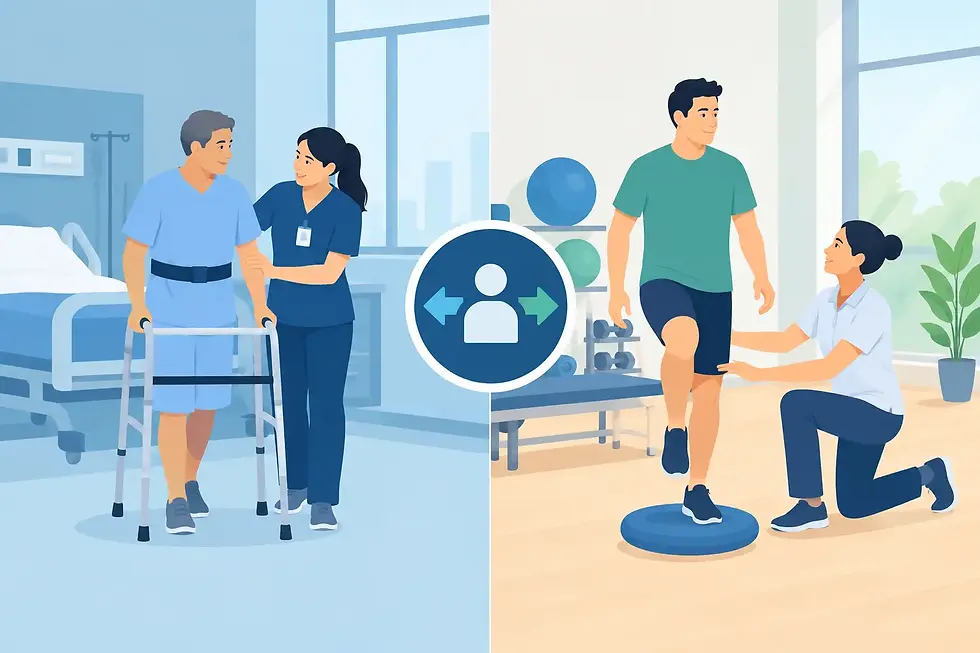
This is especially true for people who have been discharged from a hospital, finished standard physical therapy, or been told to just live with it. There is a large gap between surviving the initial problem and truly regaining independence. That gap is where many people lose momentum, and where specialized non-surgical care can make a meaningful difference.
The first step in a guide to chronic pain recovery
The first step is a thorough assessment that looks beyond the pain location. If your back hurts, the issue may also involve hip stiffness, abdominal weakness, gait changes, stress load, or postural habits. If your shoulder hurts, neck tension and nerve irritation may be part of the picture. If pain followed a stroke or long immobilization, the body may be dealing with weakness, asymmetry, and protective movement patterns that need hands-on attention.
A strong assessment asks practical questions. What can you no longer do? What activities trigger symptoms? How severe are your flare-ups? How long do they last? What have you already tried, and what happened next? Recovery planning should be based on your real life, not a generic exercise sheet.
Building a treatment plan that fits real life
The best treatment plans are specific, progressive, and realistic. They usually combine hands-on therapy, guided exercise, movement retraining, and strategies to reduce flare-up cycles. If pain has been present for months or years, recovery often works best when treatment is delivered over time, not as a one-time event.
Hands-on care can help reduce guarding, improve joint and tissue mobility, and make movement feel safer again. Therapeutic exercise then builds on that window of relief by improving strength, coordination, endurance, and confidence. Education matters too. Patients need to understand what pain means, what it does not always mean, and how to pace activity without becoming trapped by it.
It depends, of course, on the condition. A person with persistent low back pain may need core support, hip mobility, and lifting retraining. A person with neck pain and headaches may need posture correction, cervical mobility work, and stress regulation. Someone recovering from stroke may need a broader plan focused on mobility, balance, tone management, and daily function. The principle is the same, but the path should be individualized.
What patients can do between sessions
Recovery does not happen only in the treatment room. Daily habits shape the nervous system and the musculoskeletal system in powerful ways. That does not mean you need a perfect routine. It means small, repeatable actions matter.
Sleep deserves more attention than it usually gets. Poor sleep increases pain sensitivity, slows healing, and lowers resilience during flare-ups. Gentle movement throughout the day is also important. Long periods of sitting or bed rest often increase stiffness and pain, even when rest feels like the safest option.
Pacing is another key skill. Many people with chronic pain swing between overdoing it on good days and crashing afterward. A better approach is to build capacity gradually. Stop treating good days like proof that you are suddenly recovered. Use them to practice steadiness.
Stress management also belongs in any serious recovery plan. Chronic pain is physical, but stress can intensify muscle tension, poor breathing patterns, inflammation, and sleep disruption. Simple breathing work, guided relaxation, and supportive counseling can help lower the body’s threat response. That is not psychological dismissal of pain. It is a practical way to reduce one of the forces that keeps pain amplified.
When recovery feels stalled
Plateaus are common, and they do not always mean you are failing. Sometimes progress slows because the plan needs adjustment. Sometimes the exercises are too easy, too aggressive, or too disconnected from your actual goals. Sometimes another untreated issue is contributing, such as swelling, scar restriction, gait imbalance, or deconditioning.
This is where expert follow-up matters. Chronic pain care should not be a revolving door of temporary relief with no long-term direction. Patients need providers who can reassess, explain what is changing, and shift the plan accordingly. In a nonprofit clinical model like CAMED, that kind of continuity is not just a convenience. It is part of protecting access to meaningful recovery for people who might otherwise go without specialized care.
The role of affordability in chronic pain recovery
A recovery plan is only useful if people can actually stay with it. Cost is one of the biggest reasons patients stop care too soon. They improve slightly, run out of visits, or cannot justify ongoing treatment while trying to manage work, family, and basic living expenses.
That reality matters because chronic pain rarely responds well to fragmented care. Recovery takes time, repetition, and accountability. Communities need affordable pathways to non-surgical treatment before pain becomes disabling, before opioid dependence deepens, and before people feel that surgery is the only option left.
Access is not separate from outcomes. It shapes outcomes.
How to measure progress without losing hope
If you are in recovery now, look at more than the number on a pain scale. Ask whether you are moving more easily, sleeping better, needing fewer rescue measures, standing longer, walking farther, or feeling less afraid of your body. Those gains are not minor. They are the foundation of independence.
You should also expect some fluctuation. Healing is rarely linear. A hard week does not erase a month of progress. What matters is the overall trend and whether you have a plan that makes sense for your condition, your budget, and your daily life.
Chronic pain can make the future feel small. Recovery work helps widen it again, one functional gain at a time. If you have been living in the space between discharge and true healing, do not mistake delay for impossibility. With the right care, steady progression, and support that respects both your pain and your potential, recovery can become real again.


Comments