
Medical Therapy for Mobility Loss That Helps

When walking across a room starts to feel uncertain, slow, or painful, life gets smaller fast. Medical therapy for mobility loss is not just about exercise - it is about helping people stand longer, move safer, manage pain, and return to daily life with more control and less fear.
For many adults, mobility loss does not begin with one dramatic event. It builds over time after chronic pain, a stroke, surgery, injury, swelling, joint stiffness, nerve problems, or months of reduced activity. The problem is that people are often discharged once the immediate crisis is over, even though their real struggle is just beginning. They may still be unable to climb stairs, get in and out of a car, carry groceries, or trust their balance. That gap in care is where focused therapeutic treatment matters most.
What medical therapy for mobility loss actually means
Medical therapy for mobility loss refers to structured, clinically guided treatment that targets the reasons movement has become limited. That may include pain management, soft tissue treatment, joint mobilization, neuromuscular re-education, post-stroke therapy, lymphatic support, gait training, and strength or balance work based on a person’s diagnosis and functional goals.
This is different from generic fitness advice or being told to simply stay active. If mobility loss is tied to pain, weakness, spasticity, swelling, poor coordination, or musculoskeletal dysfunction, pushing through on your own can make the problem worse. Effective care starts by asking the right clinical questions. What is limiting movement? Is it pain, fear of falling, muscle guarding, post-stroke impairment, chronic inflammation, poor body mechanics, or several of these at once?
That distinction matters because two people can have the same outward problem and need very different treatment. One person may struggle to walk because hip pain changes their movement pattern. Another may have enough strength but poor balance after a neurological event. A third may have persistent leg swelling and stiffness that make every step heavier. Good therapy does not treat mobility loss as one condition. It treats the cause.
Why mobility loss gets worse without the right care
Mobility loss tends to compound itself. When movement hurts or feels unsafe, people naturally do less. That leads to deconditioning, weaker muscles, tighter joints, reduced endurance, and often more pain. Confidence falls along with physical function.
This cycle can be especially hard on older adults, people recovering from stroke, and adults managing chronic musculoskeletal conditions while trying to keep working or caring for family. Missing work, avoiding errands, needing help with basic tasks, or becoming isolated at home can happen quietly at first. Then one day the person realizes their world has narrowed.
The medical system does not always catch this early enough. Many patients are told their scans look fine, that they have reached a plateau, or that surgery may be the next step. Sometimes surgery is necessary. Often, though, there is still room for non-surgical therapeutic care that addresses function in a more practical way.
Who may benefit from medical therapy for mobility loss
The people who benefit most are often those who feel stuck between acute care and full recovery. They are no longer in the hospital, but they are not functioning the way they need to.
That includes adults living with chronic back, neck, hip, knee, or shoulder pain that changes how they walk or move. It includes stroke survivors who need continued work on balance, coordination, and limb control. It includes people with post-surgical stiffness, chronic swelling, weakness after long illness, recurrent falls, and mobility decline linked to arthritis or nerve irritation.
It can also help people who have never received a clear long-term plan. Many patients have tried brief therapy episodes, pain medication, or rest without real progress because their treatment was too short, too generic, or disconnected from their daily needs. Recovery often requires more targeted and consistent work than they were given.
What effective treatment usually includes
The best treatment plans are built around function, not just symptoms. Pain relief matters, but pain relief alone is not enough if the patient still cannot walk safely, transfer independently, or tolerate standing for normal daily tasks.
Pain reduction with movement in mind
Pain changes movement. People compensate, limp, brace, and avoid using certain joints or muscles. A strong treatment plan works to reduce pain while also correcting the movement patterns pain created. That may involve hands-on therapy, tissue work, guided exercises, positioning strategies, and techniques that calm irritation without creating new strain.
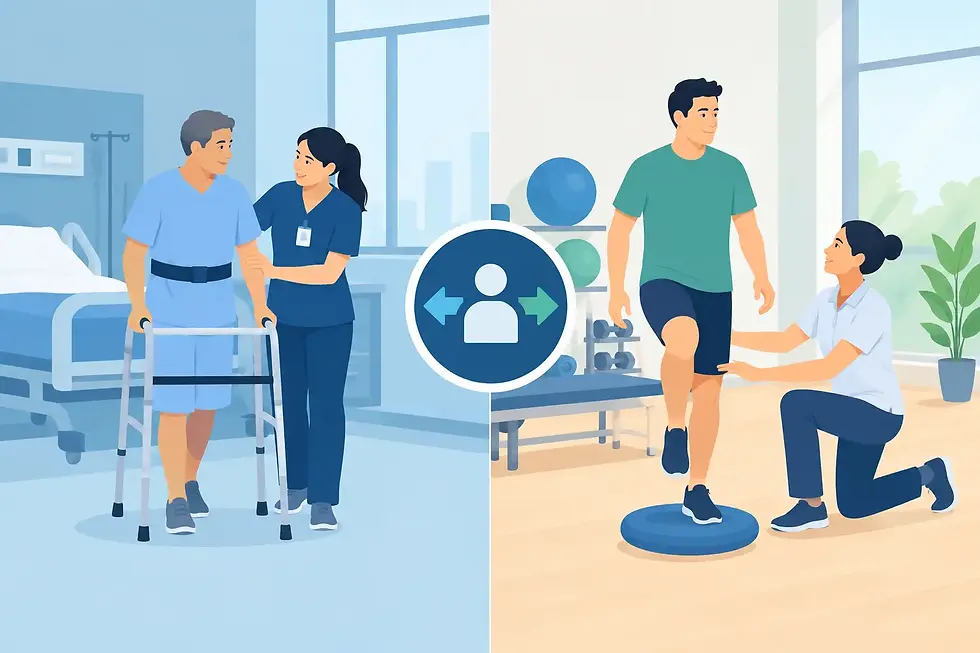
Strength, balance, and gait retraining
Mobility loss often reflects more than weakness. A person may have enough muscle power but poor timing, poor coordination, or instability when weight shifts from one side to the other. That is why gait and balance training are so important. The goal is not simply to exercise. The goal is to walk with more safety, efficiency, and confidence.
Joint and soft tissue mobility
Stiff joints and guarded tissue can sharply reduce how well someone moves, even when they are motivated to improve. Gentle, skilled manual techniques and mobility-focused treatment can help restore range of motion, decrease restriction, and make movement feel less threatening.
Neurological and post-stroke support
For stroke recovery and other neurological conditions, progress may require repeated work on coordination, body awareness, motor control, and functional task practice. These cases often need patience and clinical precision. Improvement may come in steps rather than a straight line, but meaningful change is still possible.
Swelling and lymphatic care when needed
Swelling is often overlooked as a mobility issue, yet it can create heaviness, pain, skin sensitivity, and major limits in walking or standing tolerance. In these cases, treatment may need to address fluid management and tissue health alongside strength and movement retraining.
Why one-size-fits-all rehab often falls short
Some therapy models are built around short visits, rigid visit limits, or generalized exercise sheets. That can leave patients feeling unheard and under-treated, especially when their condition is complex or chronic.
Mobility loss is rarely just a single problem. Chronic pain may coexist with weakness, fear of movement, balance changes, and financial stress. A stroke survivor may also be managing spasticity, caregiver burden, and transportation barriers. A working adult with severe back and leg pain may need treatment that is realistic for their schedule and their budget, not a plan designed for an ideal patient with unlimited time.
This is where mission-driven care makes a real difference. Clinics that focus on access, education, and longer-term recovery planning can serve people who are often overlooked by fragmented systems. CAMED was built around that reality - helping patients move beyond discharge, beyond temporary relief, and toward practical independence.
What patients should ask before starting care
Not every program offering mobility help provides true medical therapy. Before starting treatment, patients and families should ask how the provider evaluates mobility loss, whether treatment is diagnosis-specific, and how progress will be measured in daily function.
It is also fair to ask whether the plan addresses pain and movement together, whether hands-on care is part of treatment when appropriate, and whether the provider has experience with stroke recovery, chronic musculoskeletal conditions, lymphatic issues, or long-term rehabilitation needs. Affordability matters too. If care is effective but financially out of reach, many patients will have to stop before they improve.
A good provider should be able to explain not only what they do, but why they are doing it for your specific condition.
Recovery is rarely instant, but it can be meaningful
People often want to know how long it takes to regain mobility. The honest answer is that it depends on the cause, the severity, how long the problem has been present, and whether treatment is consistent and properly matched to the condition.
Some people improve quickly once pain eases and movement patterns are corrected. Others need a longer course of care because the loss of function developed over months or years. Post-stroke recovery, chronic pain conditions, and long-standing disability usually require more patience. That does not mean therapy is failing. It means the body is working through a more complicated recovery.
The right goal is not perfection. The right goal is meaningful improvement - safer walking, fewer falls, easier transfers, better endurance, less pain with daily activity, more independence at home, and a stronger sense that life is opening back up instead of closing in.
Mobility is not a luxury. It affects work, family life, mental health, and dignity. If movement has become harder, slower, or more painful, waiting for it to fix itself can cost precious time. The right medical therapy can help restore function, protect independence, and give people something every community should fight to preserve: the chance to keep moving forward.


Comments