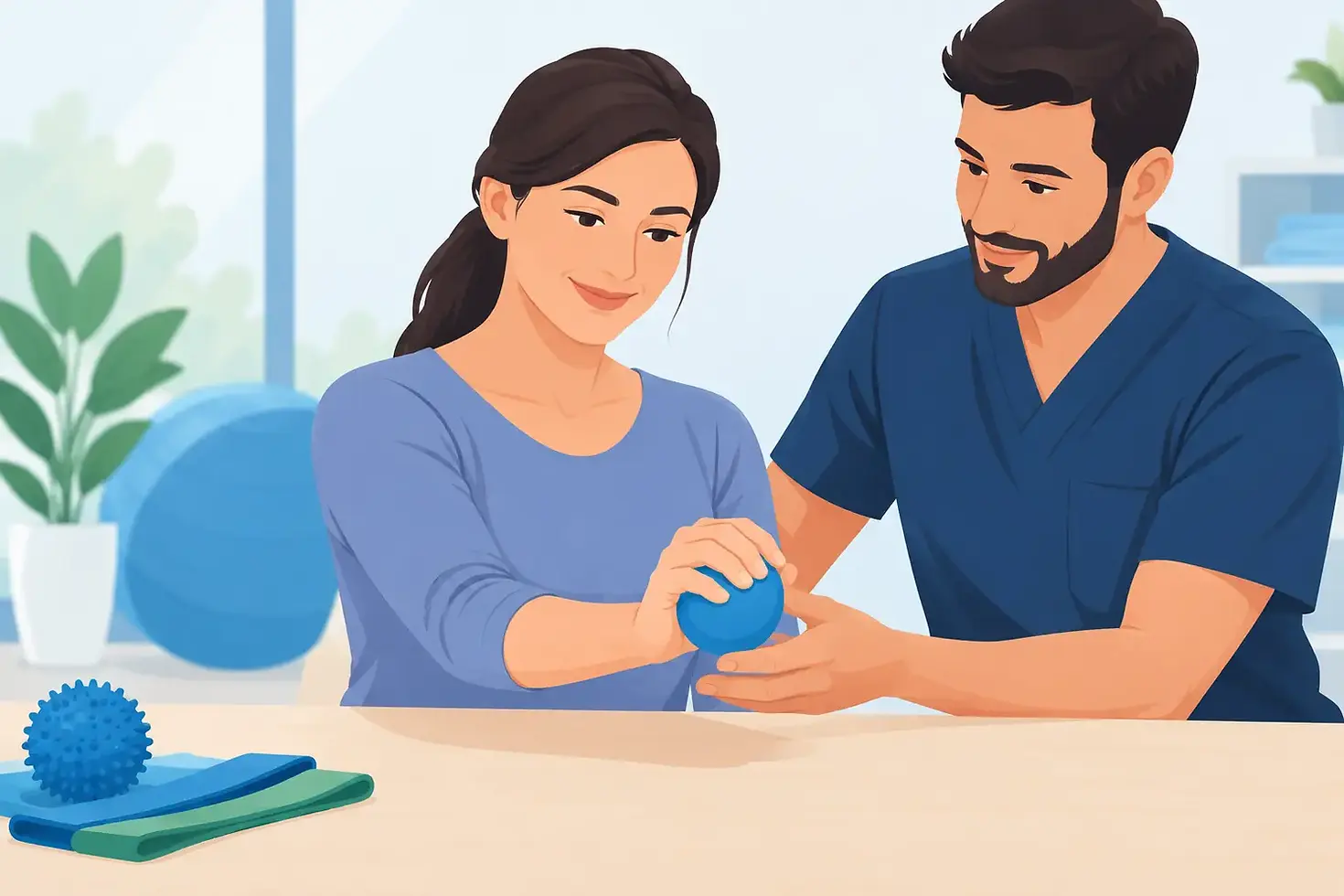
How to Regain Hand Function After Injury or Stroke

A hand that will not open, grip, button a shirt, or hold a cup can change every part of a day. If you are searching for how to regain hand function, the most useful answer is not a single exercise or a quick fix. Recovery usually requires a clear diagnosis, consistent practice, and a treatment plan that addresses pain, stiffness, weakness, sensation, and the way your brain controls movement.
Hand function can improve after stroke, injury, surgery, nerve compression, arthritis, and long-term pain conditions. The path looks different for every person, but the goal remains the same: restore as much independence, comfort, and confidence as possible.
Start by Finding Out What Is Limiting Your Hand
“Hand weakness” is not one diagnosis. A hand may feel weak because the muscles are deconditioned, but it can also be limited by swollen tissue, a stiff joint, an irritated tendon, nerve damage, poor circulation, reduced sensation, or changes in brain-to-muscle communication after a stroke.
That difference matters. Repeatedly squeezing a ball may help some people build endurance, yet it can aggravate inflammation, trigger pain, or reinforce an unhelpful movement pattern in others. Effective rehabilitation starts by identifying what is actually preventing the hand from moving and working well.
A qualified clinician may assess range of motion, grip and pinch strength, swelling, posture, sensation, coordination, pain patterns, and daily tasks such as turning a key or lifting a pan. They should also look beyond the hand. Restrictions in the neck, shoulder, elbow, or wrist can affect finger movement and grip.
Seek urgent medical care for sudden hand weakness, facial drooping, confusion, speech difficulty, a severe new headache, or one-sided numbness. These can be signs of stroke. Sudden loss of hand function after a major injury, deep cut, or suspected fracture also needs prompt evaluation.
How to Regain Hand Function With Purposeful Practice
The nervous system learns through repetition, but repetition must be meaningful. The best practice is usually built around activities you need or want to do, rather than random movement alone. Opening containers, holding a toothbrush, sorting coins, using utensils, typing, folding laundry, and reaching for a cup can all become rehabilitation when they are selected at the right level of difficulty.
Start with a task you can complete with effort but without sharp pain or prolonged flare-ups. If grasping a mug is too difficult, begin with a lightweight plastic cup. If buttons are frustrating, practice larger snaps, clips, or clothespins first. Small, successful repetitions build control and give the brain useful feedback.
For stroke recovery, the affected hand often needs active use in everyday life. Avoiding it completely can reinforce learned nonuse, where the stronger hand takes over and the weaker hand gets fewer chances to improve. That does not mean forcing a painful or unsafe movement. It means finding supported, achievable ways to include the affected hand while guided by a therapist.
Restore Motion Before Demanding Strength
A hand cannot grip well if the fingers, thumb, or wrist cannot move through enough range. Early therapy may focus on gentle opening and closing, wrist movement, thumb opposition, and carefully guided joint motion. When swelling and stiffness are major barriers, hands-on therapy, positioning, and home techniques can be just as important as strengthening.
Move slowly and with attention. A rushed grip often recruits the wrong muscles and increases tension. Aim for a smooth open hand, a controlled reach, a gentle grasp, and a relaxed release. The release is often overlooked, especially after stroke, but it is essential for practical hand use.
Build Strength Only When the Hand Is Ready
Once motion is improving and pain is controlled, progressive resistance can help rebuild grip, pinch, and endurance. This might involve soft therapy putty, light resistance bands, clothespins, or functional lifting tasks. The appropriate amount depends on the condition. A person recovering from a tendon repair follows very different precautions from someone managing chronic arthritis or post-stroke weakness.
Pain is useful information. Mild muscle fatigue may be expected, but sharp pain, increasing numbness, new swelling, or symptoms that remain worse into the next day are signals to stop and contact your care team. More exercise is not always better. The right dose is better.
Address Pain, Swelling, and Nerve Symptoms
Pain can make the hand feel weaker because the body naturally protects an area it perceives as threatened. Chronic pain can also make people brace their shoulder, forearm, and hand, reducing circulation and movement over time. Treating pain is not separate from restoring function. It is often a necessary part of recovery.
A rehabilitation plan may include therapeutic manual techniques, gentle mobility work, edema management, activity modification, splinting when appropriate, and education on pacing. If nerve irritation is involved, treatment may also address posture, neck or shoulder mechanics, and positions that worsen tingling or numbness.
Do not ignore persistent pins-and-needles sensations, burning pain, loss of sensation, or frequent dropping of objects. These symptoms may reflect nerve compression or nerve injury and deserve clinical assessment. Protect areas with reduced sensation from heat, cuts, and pressure because you may not feel damage right away.
Make Your Home Routine Realistic
A home program succeeds when it fits into daily life. Fifteen focused minutes most days can be more effective than an ambitious routine that happens once a week. Tie practice to an existing habit: after breakfast, during a favorite show, or before preparing dinner.
Track one or two meaningful measures rather than judging recovery by how the hand looks. You might record how long you can hold a utensil, how many coins you can pick up in a minute, whether you can open a door, or how much help you need with dressing. Progress is often gradual and uneven. A better week may be followed by a difficult day without meaning that recovery has stopped.
A practical routine often includes gentle mobility, one targeted strengthening or coordination activity, and one real-life task. It should leave you challenged, not depleted. If fatigue is significant after stroke or chronic illness, shorter sessions spread across the day may be safer and more productive.
Know When Specialized Rehabilitation Can Change the Course
General advice can be helpful, but persistent loss of hand function often needs specialized care. This is especially true when pain has lasted for months, movement has plateaued, stiffness is increasing, or the hand remains difficult to use after hospital discharge. The gap between acute care and full functional recovery is where many people are left without enough support.
Occupational therapy, physical therapy, and skilled therapeutic care can help create a plan that reflects your diagnosis, work demands, home responsibilities, and financial reality. A clinician can also determine whether assistive devices, braces, modified tools, or caregiver training would improve safety and independence while recovery continues.
For patients facing chronic pain, stroke-related impairment, musculoskeletal dysfunction, or long-term recovery needs, CAMED provides non-surgical therapeutic care focused on restoring movement and reducing the barriers that keep people dependent on others. Access to care should not be reserved for people with the most resources.
Give Recovery Enough Time and the Right Support
Hand recovery rarely follows a straight line. Nerves heal slowly. Muscles need gradual loading. After a stroke, the brain needs repeated opportunities to build more effective movement patterns. Improvement may continue for months or years when practice remains consistent and treatment evolves with your needs.
The goal is not to measure your hand against someone else’s timeline. It is to reclaim the next task that matters to you: signing your name, cooking for your family, returning to work, fastening a seatbelt, or holding the hand of someone you love. With skilled guidance, persistent practice, and care that respects both your condition and your circumstances, meaningful function is worth continuing to fight for.


Comments