
How to Recover Movement After Stroke
The first weeks after a stroke can feel like your body no longer follows instructions. A hand will not open. A leg feels heavy. Standing takes more effort than it should. If you are searching for how to recover movement after stroke, the most important thing to know is this: recovery is often possible, but it rarely happens by waiting. It takes guided repetition, the right kind of therapy, and a plan that continues long after hospital discharge.
Stroke affects movement because it disrupts the brain pathways that control muscle activity, balance, coordination, and sensation. For some people, weakness is mild. For others, one side of the body may be difficult to move at all. Many patients are told to be patient, and patience does matter, but recovery also depends on active retraining. The brain can adapt. This process, called neuroplasticity, is the reason therapy works. The brain learns through repetition, challenge, and meaningful movement.
How to recover movement after stroke starts with timing
Movement recovery usually follows a pattern, but it is not the same for everyone. Some people regain movement quickly in the first few months. Others continue making progress over a much longer period. Age, stroke severity, other health conditions, fatigue, pain, and access to therapy all affect the timeline.
What matters most is starting rehabilitation as soon as medically safe and continuing it consistently. Early therapy helps prevent stiffness, joint problems, muscle shortening, and learned nonuse, which happens when the body starts relying only on the stronger side. Once that pattern sets in, recovery can become harder.
This is one reason post-hospital care matters so much. Discharge does not mean recovery is finished. In many cases, it means the real work is beginning.
Repetition is not boring - it is how the brain relearns
After stroke, muscles are not always the main problem. Often the brain is struggling to send clear signals. That is why repeating simple, purposeful movements matters so much. Reaching, standing, stepping, weight shifting, grasping, and releasing may look basic, but these are the building blocks of independence.
The key is quality repetition, not random exercise. Practicing the wrong movement pattern over and over can reinforce compensation instead of recovery. For example, hiking the shoulder to lift a weak arm may help complete a task in the moment, but it can create pain and poor mechanics over time. The goal is to help the affected side participate as correctly as possible.
That usually means therapy should be challenging enough to stimulate change, but not so difficult that form collapses. It is a balance. Too little effort does not move recovery forward. Too much frustration can lead to fatigue, pain, or giving up.
The therapies that help recover movement after stroke
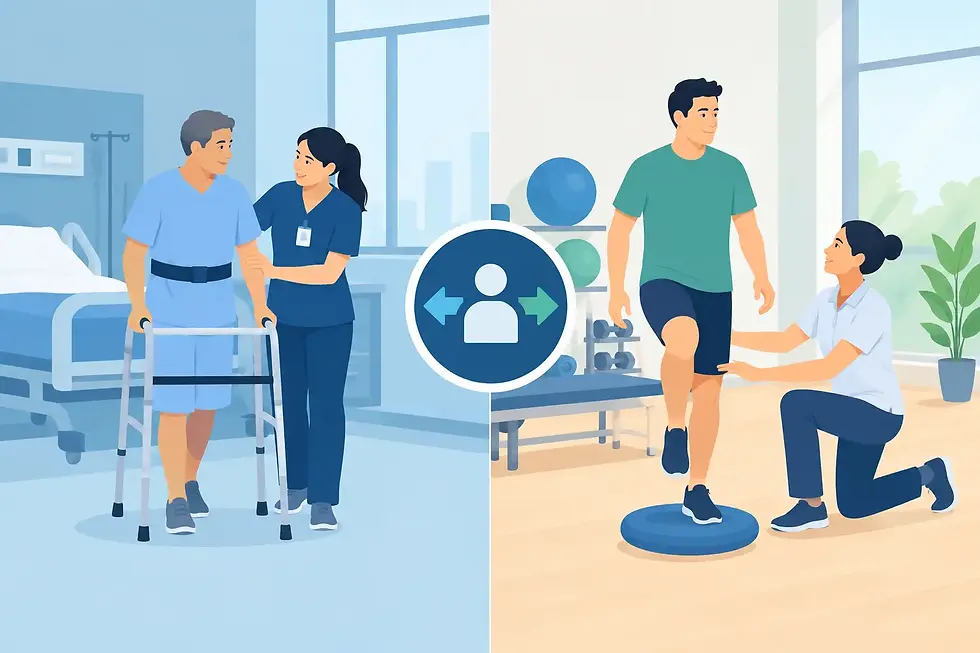
Physical therapy often focuses on walking, standing balance, transfers, leg strength, and overall mobility. Occupational therapy targets arm and hand function, dressing, bathing, eating, and home tasks. If speech or swallowing were affected, speech therapy may also be part of recovery. These disciplines work best together, not in isolation.
Hands-on treatment can also play an important role, especially when stiffness, pain, swelling, or abnormal muscle tone limits movement. Some stroke survivors develop tight muscles and joints that make it hard to lift an arm, open a hand, or place a foot properly. In those cases, reducing restrictions in the body can create a better foundation for active retraining.
This is where specialized post-stroke care can make a meaningful difference. Patients often need more than a standard exercise sheet. They need guided progression, body-specific treatment, and a long-term strategy that addresses what was missed after discharge.
Focus on these movement goals first
Most people want to know which exercises are best. That is understandable, but recovery works better when the focus is on functions rather than isolated motions. Before advanced tasks, the body needs core control, safe weight bearing, and enough joint mobility to move without strain.
Early goals often include sitting balance, rolling in bed, standing up safely, shifting weight onto the weaker side, and improving shoulder positioning. From there, therapy may progress to stepping, walking practice, stair work, reaching, grasping, and hand coordination.
For the arm and hand, improvement can be slower than for the leg. That does not mean therapy is failing. Hand recovery is complex because it requires both strength and fine motor control. Even small gains matter. Being able to stabilize an object, assist during dressing, or open the hand more comfortably can improve daily life in a real way.
Strength matters, but so do balance, sensation, and pain
Movement after stroke is not just about weakness. Many patients also deal with numbness, poor body awareness, shoulder pain, spasticity, dizziness, or fear of falling. Each of these can interfere with progress.
A person may technically have enough strength to stand, but if balance is poor or the brain does not fully register where the foot is placed, walking will still feel unsafe. Another person may have arm movement available, but shoulder pain limits use. If these barriers are ignored, recovery slows.
This is why effective rehabilitation should look at the whole picture. The question is not only whether a muscle can contract. The real question is whether the body can move safely, repeatedly, and with enough control to support everyday life.
What families can do at home
Families often want to help, but they are not always shown how. Support at home can be powerful when it is consistent and safe. That does not mean forcing exercise all day. It means building recovery into normal routines.
Encouraging the affected arm to rest in a supported position, helping the person sit evenly instead of leaning to one side, practicing standing with proper setup, and making sure the weaker leg is included during transfers can all reinforce therapy goals. So can creating time for short practice sessions rather than one exhausting effort.
At the same time, families should avoid pulling on a weak arm, rushing transfers, or doing everything for the survivor when some participation is possible. Help should increase safety, not replace effort. Recovery depends on use.
What slows progress and what to do about it
One common setback is inconsistency. A patient may begin strong in therapy, then lose access, miss appointments, or stop because progress feels slow. Another issue is treating stroke recovery as short term when it is often a long-term process. Plateaus happen, but a plateau does not always mean potential is gone. Sometimes it means the current program is no longer specific enough.
Pain is another major barrier. Shoulder pain, back pain, knee strain, and hand tightness can limit participation and reduce confidence. Addressing pain directly is not separate from movement recovery. It is part of it. The same is true for depression, poor sleep, transportation problems, and cost. These are not side issues for many families. They are the reason recovery gets interrupted.
That is why access matters. Affordable, skilled, community-based rehabilitation can change the course of recovery for people who would otherwise be left with preventable disability. CAMED was built around that gap, helping patients who need specialized therapeutic care after the hospital phase ends.
How to know if recovery is still possible
If movement has not returned yet, people often fear they have missed their chance. The truth is more hopeful and more honest than that. The fastest gains often happen early, but improvement can continue beyond the early window. The body and brain still respond to the right input later on. The pace may be slower, and goals may need to be more specific, but change is still possible.
What matters is whether treatment matches the problem. If the issue is spasticity, poor alignment, weakness, pain, neglect, or fear of movement, the plan should address that directly. Generic exercise is rarely enough. Stroke recovery works best when care is individualized, practical, and built around function.
Some patients regain near-normal walking. Some recover enough hand use to return to work tasks. Others may not return to their prior level, but still make meaningful gains in transfers, dressing, balance, comfort, and independence. Those gains are not small. They reduce caregiver burden, protect dignity, and restore pieces of daily life that stroke tried to take away.
Keep the goal bigger than exercise
The real aim is not to perform therapy for its own sake. It is to help a person stand in the kitchen again, button a shirt, get to the bathroom safely, hold a grandchild, return to church, or walk outside without fear. That is what movement recovery means.
If you are wondering how to recover movement after stroke, start with this mindset: do not wait for function to come back on its own, and do not assume discharge means the opportunity has passed. Recovery is built through repeated, skilled, purposeful care that respects both the science and the person living through it. Every safe movement practiced with intention is a message to the brain that this body is still worth fighting for.


Comments