
Hands On Therapy vs Physical Therapy

If you have been told to start rehab after an injury, surgery, stroke, or months of unresolved pain, you may be comparing hands on therapy vs physical therapy and wondering which one actually fits your needs. That question matters more than most people realize. The wrong fit can leave people cycling through appointments without real progress, while the right approach can reduce pain, restore movement, and help protect long-term independence.
The first thing to understand is that these terms are not always opposites. In many clinics, hands-on therapy is one part of physical therapy. In other settings, hands-on care is offered as a specialized therapeutic service outside a standard physical therapy model. That overlap is why patients often get confused, and why clear expectations matter before you begin treatment.
What is the difference between hands on therapy vs physical therapy?
Physical therapy is a broad healthcare discipline focused on improving movement, function, strength, balance, and recovery after illness or injury. It often includes exercise therapy, gait training, posture correction, mobility work, home programs, and education about pain and body mechanics. Depending on the clinic, it may also include manual treatment.
Hands-on therapy usually refers to direct, therapist-applied techniques. That can include soft tissue work, joint mobilization, stretching, myofascial techniques, lymphatic methods, neuromuscular facilitation, and other forms of manual care designed to improve mobility and reduce pain. The defining feature is simple: the therapist is actively using skilled touch to assess and treat the body.
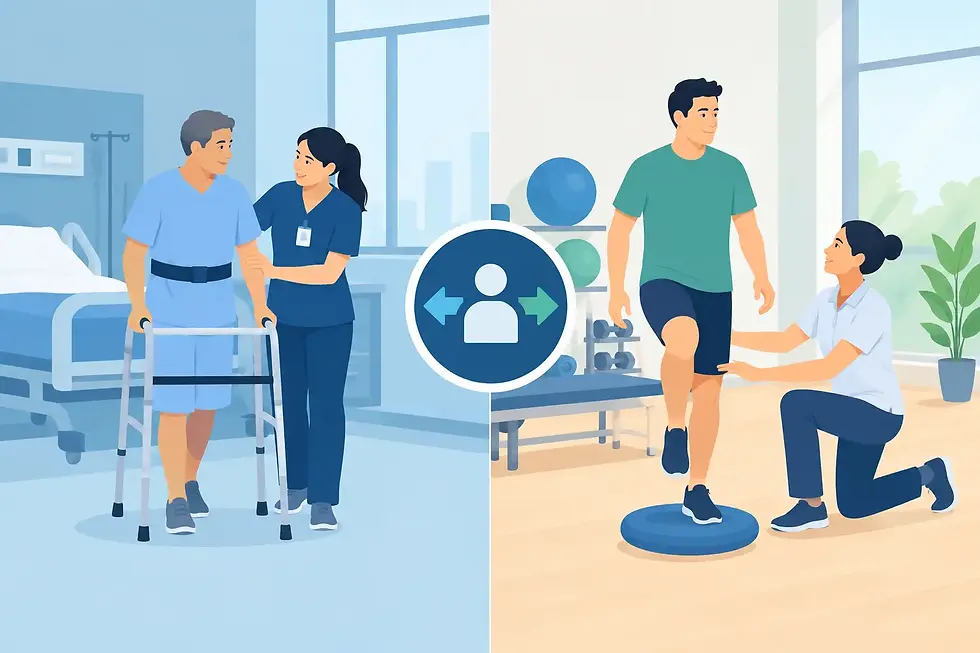
So when people ask about hands on therapy vs physical therapy, the most accurate answer is this: physical therapy is the larger category, while hands-on therapy is often a treatment method within it. But in practice, some patients are choosing between an exercise-heavy rehab model and a more specialized manual treatment model. That practical difference is what affects outcomes.
When hands-on therapy can make the biggest difference
Some conditions respond especially well to direct manual care. If a joint is stiff, scar tissue is limiting movement, muscles are guarding from pain, or swelling is affecting function, hands-on treatment may help create change faster than exercise alone. For many patients, pain has a mechanical component. The body does not just need strengthening. It needs skilled intervention to release restriction and improve motion.
This is often true for chronic neck and back pain, frozen shoulder, post-stroke stiffness, post-surgical tightness, nerve-related mobility problems, and complex musculoskeletal dysfunction. Patients in these situations are frequently told to keep exercising, even when movement feels blocked or painful. That can be frustrating and discouraging. A hands-on approach may help calm the system enough for exercise to become useful again.
It can also matter for people who have been overlooked by conventional care pathways. Many patients leave the hospital, complete a limited course of standard rehab, and still cannot turn their head fully, walk comfortably, lift an arm, or manage daily activities without pain. They are technically discharged, but not truly recovered. This gap is where specialized therapeutic care becomes critical.
When standard physical therapy may be the better starting point
Physical therapy remains essential for many recovery goals. If the main issue is rebuilding strength after deconditioning, improving endurance, retraining balance, or learning safe movement after surgery, a structured physical therapy plan may be the right first step. Exercise-based rehabilitation is especially important when weakness, instability, or poor motor control are the main drivers of dysfunction.
For example, someone recovering from a knee replacement may need progressive strengthening, gait correction, and functional training more than extensive manual work. A person with falls risk may need balance drills, lower-body strengthening, and coordination work. Someone with a sports injury may need gradual loading to return safely to activity.
This does not make hands-on treatment less valuable. It simply means treatment should match the problem. Pain relief without rebuilding capacity is incomplete. But exercise without addressing restriction, swelling, or guarding can also stall recovery.
Why some patients do not improve with exercise alone
There is a common belief that if you just strengthen enough, pain will resolve. Sometimes that is true. Often, it is not.
A person with chronic pain may have protective muscle tension, limited joint glide, abnormal movement patterns, and fear of movement all at once. If they are handed generic exercises without enough one-on-one assessment, they may perform the motions incorrectly, flare symptoms, or stop treatment altogether. That does not mean rehab failed because the patient did not try. It may mean the treatment plan was too general for a more complex condition.
Hands-on therapy can help by identifying what is physically blocking progress. Is the shoulder capsule restricted? Is scar tissue limiting motion? Is swelling changing the way the limb moves? Is post-stroke tone interfering with functional use? These details matter. They shape whether a patient needs manual mobilization, motor retraining, therapeutic exercise, or a combination of all three.
Hands on therapy vs physical therapy for chronic pain
Chronic pain deserves special attention because it rarely responds well to one-size-fits-all care. People living with pain for months or years are often balancing work demands, sleep disruption, stress, financial strain, and reduced activity. By the time they seek help, they may already have tried medication, rest, imaging, injections, or short courses of treatment that never addressed the full picture.
In chronic pain cases, manual therapy can provide meaningful relief, especially when stiffness, tissue restriction, and movement fear are part of the problem. The body often needs a safer entry point back into motion. Skilled touch can reduce guarding and help patients feel movement is possible again.
At the same time, chronic pain care should not stop at temporary relief. It should move toward function. That means restoring walking tolerance, lifting ability, range of motion, daily independence, and confidence. The strongest care plans usually blend symptom relief with progressive rehabilitation and realistic education about pacing, recovery time, and prevention.
Questions to ask before choosing care
Instead of focusing only on the label, ask how treatment is actually delivered. Will your evaluation be individualized? How much one-on-one time will you get with a clinician? Will the provider use manual techniques when needed, or mostly supervise exercises? Is the plan designed for your diagnosis, or is it a standard protocol?
You should also ask what outcomes are being measured. Good care is not just about attending sessions. It is about whether pain decreases, mobility improves, and daily life becomes easier. If you have a complex condition, ask whether the clinic has experience with long-term recovery, neurological impairment, lymphatic issues, or chronic musculoskeletal problems. Specialized cases need specialized skill.
Cost and access matter too. Many patients delay treatment because they assume specialized care is out of reach. That delay can worsen stiffness, disability, and dependence. Mission-driven organizations such as CAMED exist because effective pain care should not be limited to those who can easily afford it. Recovery should not be a privilege.
The best answer is often both
For many people, the real answer to hands on therapy vs physical therapy is not either-or. It is sequence and balance.
A patient may begin with hands-on treatment to reduce pain, improve tissue mobility, and restore enough movement to tolerate activity. Then the focus may shift toward therapeutic exercise, endurance, balance, and home-based self-management. Another patient may need exercise as the core plan, with manual care used strategically when progress stalls. Good treatment adapts over time.
That flexibility is especially important for patients recovering from stroke, living with chronic pain, or trying to avoid surgery. In these situations, care should not be rushed into a narrow model. It should respond to what the body is showing week by week.
The most effective therapy is not the one with the better label. It is the one that sees the whole person, addresses the true barriers to recovery, and builds a path back to movement with skill, patience, and purpose. If your pain or disability has been dismissed, minimized, or left unfinished after standard care, keep asking better questions. The right treatment should help you move forward, not just keep you busy.


Comments