
Best Therapies for Chronic Pain That Help

Chronic pain changes more than your comfort level. It changes how you sleep, how you work, how long you can stand in the kitchen, whether you can carry groceries, and how much of your life starts revolving around what hurts. When people search for the best therapies for chronic pain, they are usually not looking for theory. They are looking for a way to move again, work again, and feel like themselves again.
That is why the right answer is rarely one single treatment. Chronic pain is complex. It may involve joints, muscles, nerves, scar tissue, inflammation, weakness, poor movement patterns, or the aftereffects of surgery, stroke, injury, or long periods of limited activity. The best care looks at function, not just symptoms, and it builds a plan around what is actually keeping the pain going.
What makes the best therapies for chronic pain effective?
The most effective therapies do two things at once. They reduce pain, and they improve function. If a treatment lowers pain for a few hours but leaves you just as stiff, weak, or limited as before, it may offer relief without real recovery.
Strong chronic pain care also respects a basic truth - persistent pain often lasts because several problems are feeding each other. Tight tissue can limit motion. Limited motion can lead to compensation. Compensation can overload other areas. Fear of movement can reduce activity further. Over time, the body becomes less resilient, and daily tasks become harder.
That is why treatment usually works best when it is personalized, hands-on when needed, and paired with a structured plan for rebuilding movement and tolerance. Some people need tissue-focused care. Others need nervous system support, strength retraining, or stroke-specific rehabilitation. Often, they need a combination.
Manual therapy for chronic pain relief
Manual therapy is one of the most valuable options for people whose pain is linked to musculoskeletal restriction, stiffness, postural strain, or impaired movement. This includes skilled hands-on treatment aimed at joints, muscles, fascia, and soft tissue.
When done well, manual therapy can reduce guarding, improve circulation, restore mobility, and help painful areas tolerate movement again. It is especially useful for neck pain, back pain, shoulder restriction, joint stiffness, post-injury dysfunction, and pain patterns that worsen because the body is moving around a problem instead of through it.
This is not a quick fix for every condition. If pain is driven mainly by active inflammation, severe nerve compression, or untreated systemic illness, hands-on care alone may not be enough. But for many people living with long-term pain and mechanical restriction, it can be the turning point that allows exercise and daily function to improve again.
Therapeutic exercise and movement retraining
Exercise is often recommended too casually, which is one reason many patients feel dismissed. Being told to just stretch or stay active is not the same as receiving therapeutic exercise tailored to your pain pattern, strength level, mobility limits, and daily demands.
The right movement program helps retrain the body in a way that feels safe and achievable. It can improve joint stability, support better posture, reduce overuse of compensating muscles, and build confidence in movement again. For someone with chronic low back pain, that may mean core stabilization and hip mobility. For someone with shoulder pain, it may involve scapular control and progressive loading. For an older adult with pain and balance issues, it may center on gait, coordination, and fall prevention.
The trade-off is that exercise takes consistency. Progress is usually gradual, not dramatic. But when paired with skilled evaluation and the right progression, it remains one of the most durable therapies available because it addresses the loss of capacity that chronic pain so often creates.
Neuromuscular therapy and nervous system support
Not all pain comes from obvious injury. Sometimes the nervous system stays on high alert long after tissues should have calmed down. Pain can become amplified, widespread, or disproportionate to simple findings on imaging. That does not mean the pain is imaginary. It means the nervous system has become part of the problem.
Neuromuscular therapy and pain-informed rehabilitation can help by reducing sensitivity, improving body awareness, and restoring more normal muscle activation. Breath work, graded exposure to movement, desensitization strategies, and careful pacing may all play a role here.
This approach matters for people with longstanding pain who feel stuck in a cycle of flare-ups. It is also important after periods of immobility, trauma, or repeated failed treatments. In these cases, progress may depend less on pushing harder and more on rebuilding tolerance in a measured way.
Best therapies for chronic pain after stroke or neurologic injury
Pain after stroke or neurologic injury is often overlooked because the focus stays on survival and basic recovery. But unresolved pain, stiffness, spasticity, and weakness can make daily function much harder and can delay meaningful rehabilitation.
For this group, therapy needs to go beyond simple pain relief. It should support range of motion, neuromuscular re-education, positioning, balance, gait, and use of the affected side. Hands-on therapy, guided movement, and functional retraining are often most effective when combined, because the goal is not only to reduce discomfort but to preserve independence.
There is no universal timeline here. Some patients improve steadily with structured rehabilitation. Others need long-term support to maintain mobility and prevent worsening contracture, pain, or dependence. What matters is early attention, consistency, and care that sees pain as part of the recovery picture, not a side issue.
Lymphatic and swelling-focused therapy
In some chronic pain cases, swelling and poor fluid movement are part of what keeps tissue irritated and movement limited. This can happen after surgery, injury, cancer treatment, immobility, or certain chronic medical conditions.
Lymphatic therapy and edema-focused treatment can help reduce heaviness, pressure, and tissue congestion. When swelling decreases, comfort and mobility often improve with it. This is especially relevant for patients whose pain is not just sharp or aching, but also accompanied by tightness, fullness, or visible changes in the affected area.
This type of therapy is often underused. Yet for the right patient, it can make other treatment more effective because tissues become easier to move, load, and rehabilitate.
Education, pacing, and long-term self-management
One of the best therapies for chronic pain is not a machine or a procedure. It is learning how to manage the condition without letting it control every part of life.
That includes understanding flare-ups, knowing when to rest and when to keep moving, recognizing triggers, and building routines that protect function. Education may sound simple, but it is powerful when it helps patients stop cycling between overdoing it on good days and paying for it on bad days.
Pacing does not mean giving up activity. It means doing activity strategically. For many people, that shift reduces setbacks and creates steadier gains over time.
This is also where community-based care matters. People living with chronic pain often feel isolated, financially stretched, and forced to navigate fragmented systems. Affordable, specialized therapy can change more than pain levels. It can restore access to recovery itself.
What about medications and procedures?
Medications, injections, and other procedures may have a role, depending on the diagnosis. For some patients, they reduce symptoms enough to allow participation in therapy. For others, they provide only temporary relief without changing the underlying problem.
That does not make them bad options. It means they should be used thoughtfully. If a treatment decreases pain but does not improve strength, movement, tolerance, or daily performance, it may need to be combined with rehabilitation rather than treated as a full answer.
Surgery can also be necessary in select cases, especially when there is structural damage, instability, or progressive neurologic compromise. But many people are steered toward invasive pathways before conservative care has been fully explored. A serious, evidence-informed therapeutic plan should come first whenever appropriate.
How to choose the right therapy for your pain
The best treatment depends on what is driving your pain and what your body can currently tolerate. A person with chronic neck tension from postural overload will not need the same plan as someone recovering from stroke, living with severe joint stiffness, or dealing with post-surgical swelling and scar restriction.
A good starting point is a thorough evaluation that looks at pain history, mobility, strength, nerve involvement, function, and barriers to recovery. From there, therapy should be matched to your condition, adjusted as you respond, and measured by meaningful outcomes. Can you walk farther? Sleep better? Dress yourself with less pain? Return to work tasks? Lift your arm? Stand long enough to cook?
That is the standard that matters.
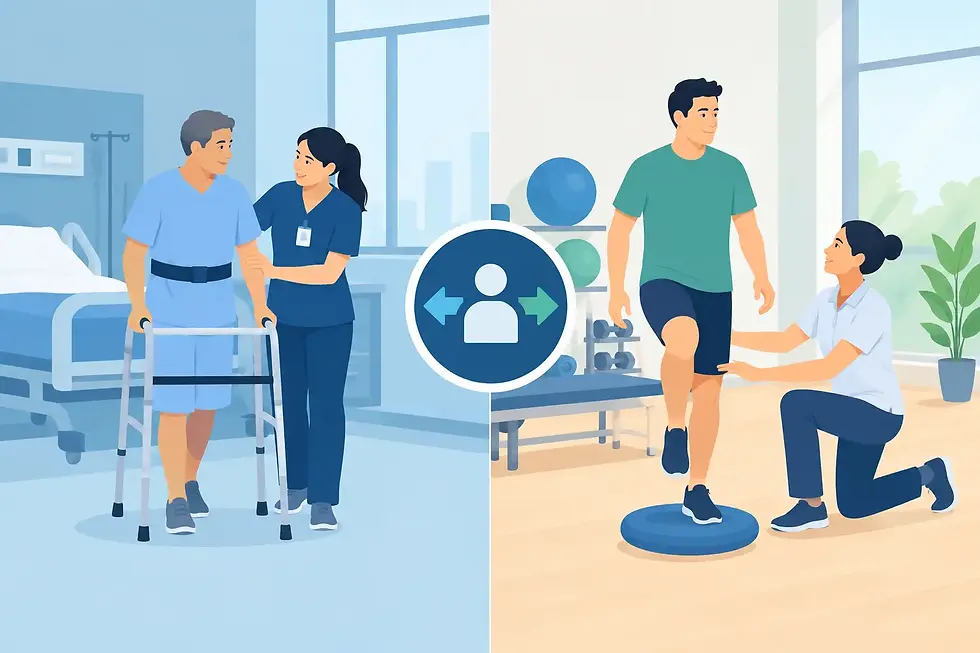
At CAMED, this kind of care matters because too many patients fall into the gap between hospital discharge and full recovery. They are told the emergency has passed, yet they are still living with pain, weakness, stiffness, and shrinking independence. Specialized non-surgical therapy can be the bridge that helps people reclaim function before their limitations become permanent.
If you are weighing treatment options, look for care that sees the whole picture - not just the pain score, but the life that pain has interrupted. The best therapy is the one that helps you return to that life, one practical gain at a time.


Comments